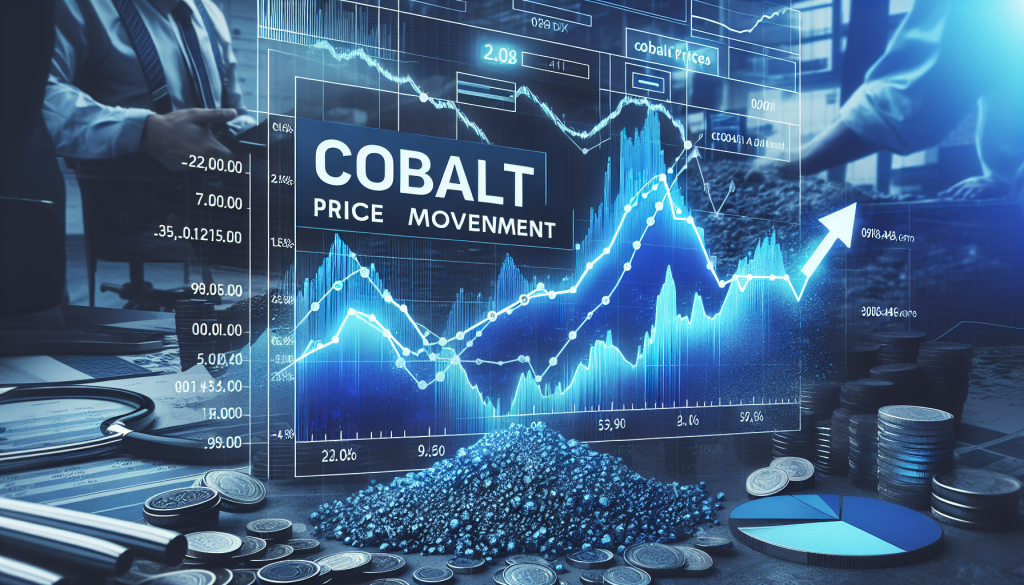
Electric vehicle manufacturers are grappling with unprecedented challenges as cobalt price movement continues to create ripple effects throughout the global automotive supply chain. The strategic metal, essential for lithium-ion battery production, has experienced dramatic fluctuations that are forcing industry leaders to reconsider their sourcing strategies and production timelines.
Recent market data reveals that cobalt prices have surged by over 40% in the past eighteen months, driven by supply constraints from the Democratic Republic of Congo, which controls approximately 70% of global cobalt production. This cobalt price movement has created a domino effect, with battery manufacturers passing increased costs onto automakers, who must then decide whether to absorb expenses or adjust vehicle pricing strategies.
Tesla, Ford, and General Motors have all reported significant impacts from volatile cobalt markets in their latest quarterly earnings. The unpredictable nature of cobalt price movement has prompted these companies to accelerate research into alternative battery chemistries, including lithium iron phosphate (LFP) and nickel-based formulations that reduce or eliminate cobalt dependency entirely.
Supply chain executives are implementing sophisticated hedging strategies to mitigate the financial impact of sudden cobalt price movement. Major automakers are now entering into long-term supply agreements, sometimes spanning five to ten years, to secure stable pricing and guaranteed material availability. These contracts often include price escalation clauses tied to market indices, providing some protection against extreme volatility while ensuring suppliers remain economically viable.
The geographic concentration of cobalt mining has amplified concerns about supply security, particularly as demand from the electric vehicle sector continues its exponential growth. Current projections indicate that EV battery production will require three times more cobalt within the next five years, intensifying pressure on existing supply chains and contributing to ongoing cobalt price movement volatility.
Battery manufacturers like CATL and Panasonic are responding to cobalt price movement by diversifying their sourcing strategies and investing heavily in recycling technologies. Advanced recycling processes can now recover up to 95% of cobalt from spent batteries, creating a secondary supply stream that helps reduce dependence on newly mined materials. This circular economy approach is becoming increasingly attractive as primary cobalt costs continue to fluctuate dramatically.
Innovation in battery chemistry represents the most promising long-term solution to cobalt price movement challenges. Companies like BYD have successfully commercialized LFP batteries that contain no cobalt while delivering competitive performance metrics. These alternative chemistries are gaining traction among cost-conscious manufacturers, particularly for entry-level and mid-range electric vehicles where maximum energy density is less critical than affordability.
Mining companies are responding to sustained high prices by expanding production capacity and developing new extraction sites outside traditional regions. Projects in Australia, Canada, and the Philippines are entering production phases, potentially diversifying the global supply base and reducing the market impact of any single region’s political or operational disruptions.
Financial markets have taken notice of cobalt price movement patterns, with commodity trading firms and investment funds increasingly active in cobalt futures markets. This financialization has added another layer of complexity to pricing dynamics, as speculative trading can amplify price swings beyond what fundamental supply and demand factors would typically justify.
Automotive industry analysts predict that cobalt price movement will remain a critical factor in EV production planning for at least the next decade. However, the combination of supply diversification, recycling advancement, and alternative battery chemistry development is expected to gradually reduce the industry’s vulnerability to cobalt market volatility. Companies that successfully navigate this transition period while maintaining production efficiency and cost competitiveness will likely emerge as leaders in the rapidly evolving electric vehicle landscape.