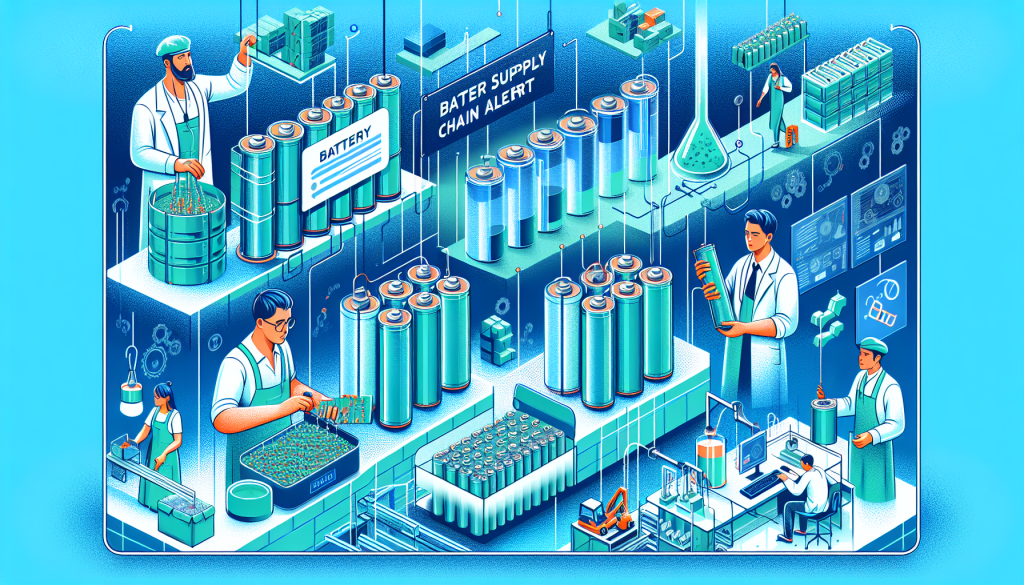
Global battery manufacturers are facing an unprecedented crisis as critical metal shortages trigger widespread supply chain disruptions. The latest battery supply chain alert has sent shockwaves through industries from electric vehicles to renewable energy storage, with lithium, cobalt, and nickel prices reaching extreme levels that threaten production timelines and profitability across the sector.
Market analysts warn that these supply constraints could fundamentally reshape the battery industry’s landscape, forcing manufacturers to reconsider sourcing strategies, accelerate recycling initiatives, and explore alternative chemistries. The ripple effects extend far beyond battery production, potentially impacting the global transition to clean energy and electric mobility.
Lithium Prices Surge as Demand Outstrips Supply
Lithium carbonate prices have skyrocketed to unprecedented levels, with spot prices exceeding $85,000 per metric ton in recent weeks. This represents a staggering 340% increase compared to the same period last year, creating a perfect storm for battery manufacturers worldwide. The battery supply chain alert intensifies as major lithium mining operations struggle to keep pace with exploding demand from electric vehicle manufacturers and grid-scale energy storage projects.
South American lithium producers, particularly in Chile’s Atacama Desert and Argentina’s lithium triangle, report production bottlenecks due to extreme weather conditions and regulatory challenges. Meanwhile, Australian spodumene operations face their own constraints, with several key mines operating at reduced capacity due to equipment failures and labor shortages. These supply disruptions have forced battery manufacturers to implement emergency procurement strategies, often paying premium prices to secure even minimal quantities of lithium compounds.
Industry experts project that lithium demand will continue to outstrip supply for at least the next 18 months, with new mining projects unable to come online quickly enough to alleviate the shortage. This has prompted major battery manufacturers to forge direct partnerships with mining companies and invest heavily in upstream production capabilities.
Cobalt and Nickel Markets Face Unprecedented Volatility
The battery supply chain alert extends beyond lithium to include severe constraints in cobalt and nickel markets. Cobalt prices have surged past $85,000 per metric ton, driven by ongoing political instability in the Democratic Republic of Congo, which supplies approximately 70% of global cobalt production. Recent mining disruptions and export restrictions have created a supply crunch that particularly impacts high-performance battery chemistries used in premium electric vehicles and aerospace applications.
Nickel markets present an equally challenging landscape, with Class I nickel suitable for battery applications trading at significant premiums. Indonesian nickel operations, despite ramping up production capacity, face quality control issues and logistical bottlenecks that limit their ability to serve the battery market effectively. The situation has become so acute that several major battery manufacturers have temporarily shifted production toward lithium iron phosphate (LFP) chemistries to reduce their dependence on both cobalt and nickel.
The volatility in these critical metals has forced battery manufacturers to implement sophisticated hedging strategies and diversify their supplier bases. Some companies are exploring long-term offtake agreements with miners, while others are investing directly in mining operations to secure stable supply chains. The battery supply chain alert has also accelerated research into alternative battery chemistries that reduce or eliminate dependence on these constrained materials.
Recycling Initiatives Gain Momentum Amid Supply Crisis
As the battery supply chain alert continues to impact global markets, recycling initiatives are gaining unprecedented momentum. Battery recycling companies report a surge in demand for their services, with recovered lithium, cobalt, and nickel commanding premium prices. Advanced recycling technologies that can recover 95% or more of critical metals from end-of-life batteries are attracting massive investment from both battery manufacturers and automotive companies.
European battery recyclers are operating at full capacity, processing everything from consumer electronics to electric vehicle batteries. The economics of battery recycling have fundamentally shifted, with recycled materials now cost-competitive with virgin metals in many applications. This transformation has prompted major automakers to establish closed-loop recycling programs, ensuring that batteries from their vehicles can be processed and the materials reused in new battery production.
Regulatory support is also accelerating recycling adoption. New battery regulations require minimum recycled content thresholds, creating guaranteed demand for recycled materials. The battery supply chain alert has made it clear that recycling is no longer just an environmental initiative but a critical business necessity for maintaining stable material supplies and controlling costs.
Strategic Response and Market Adaptation
The ongoing battery supply chain alert has forced manufacturers to fundamentally rethink their operational strategies. Leading battery companies are diversifying their chemistry portfolios, with many increasing production of LFP batteries that eliminate cobalt entirely and reduce nickel requirements. While LFP batteries offer lower energy density compared to nickel-rich chemistries, their lower material costs and improved supply security make them attractive for many applications.
Geographic diversification of supply sources has become a top priority. Companies are moving away from single-source dependencies and establishing regional supply networks that reduce transportation costs and geopolitical risks. This shift includes developing closer relationships with North American and European mining operations, even when production costs are higher than traditional sources.
Investment in alternative technologies is accelerating rapidly. Solid-state batteries, sodium-ion chemistries, and other emerging technologies are receiving increased funding as companies seek to reduce their exposure to constrained critical metals. While these technologies are still in development, the current supply crisis has created urgency around commercializing alternatives that offer greater material security.
The current battery supply chain alert represents more than a temporary market disruption—it signals a fundamental shift toward more resilient, diversified supply networks. Companies that successfully navigate this crisis by securing stable material supplies, investing in recycling capabilities, and developing alternative chemistries will emerge stronger and better positioned for long-term growth. Those that fail to adapt risk being left behind as the industry transforms in response to these unprecedented challenges.