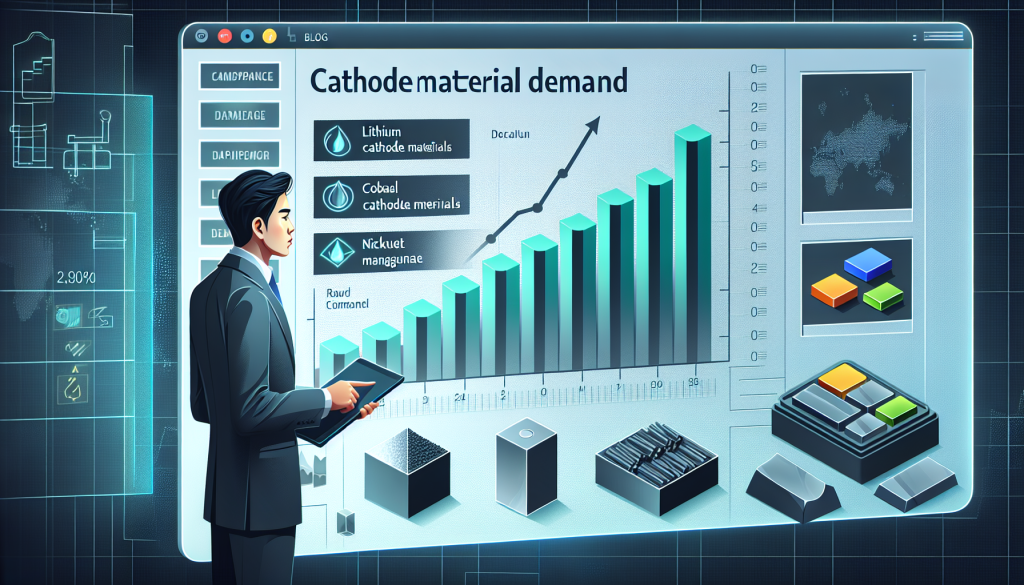
The global battery revolution has reached a critical inflection point where cathode material demand is emerging as the dominant force reshaping entire commodity markets. While investors have long focused on raw lithium and cobalt prices, the real catalyst for the next metals supercycle lies in the sophisticated cathode materials that form the heart of every advanced battery system.
Cathode materials account for approximately 40-50% of a lithium-ion battery’s total cost, making them the single largest expense component in battery manufacturing. This cost structure has created an unprecedented demand dynamic that’s rippling through supply chains from mining operations in the Democratic Republic of Congo to processing facilities in China and battery gigafactories across North America and Europe.
The numbers behind cathode material demand tell a compelling story. Global production capacity has expanded from roughly 800,000 tons in 2020 to over 2.1 million tons today, yet supply constraints continue to plague manufacturers. Tesla’s latest supplier agreements reveal cathode material costs representing nearly $3,000 per vehicle, highlighting how this single component drives the economics of the entire electric vehicle transition.
What makes cathode material demand particularly significant is its diversification beyond traditional automotive applications. Energy storage systems for grid stabilization now consume approximately 25% of global cathode production, while consumer electronics, power tools, and emerging applications like electric aviation are creating additional demand vectors that weren’t factored into earlier market projections.
The geopolitical implications of cathode material demand cannot be understated. China currently controls roughly 75% of global cathode material production capacity, creating strategic vulnerabilities that Western governments are actively addressing through domestic investment initiatives. The U.S. Inflation Reduction Act and similar European policies are directing billions toward reshoring cathode manufacturing capabilities, but the technical complexity and capital intensity of these operations mean supply diversification will take years to materialize.
Perhaps most importantly for metals investors, cathode material demand is driving a shift toward higher-value, more technically sophisticated products that command premium pricing. While raw lithium carbonate trades as a commodity, advanced cathode materials like high-nickel NCM and next-generation LFP variants sell for $15-25 per kilogram, representing significant value-add opportunities for companies that can execute the complex manufacturing processes required.
The technological evolution within cathode chemistry is accelerating demand for specific metals in unexpected ways. Silicon nanowire cathodes require specialized processing equipment and ultra-pure materials, while solid-state battery cathodes demand entirely new supply chains for materials like sulfide electrolytes. These emerging technologies are creating demand for metals and processing capabilities that didn’t exist in traditional lithium-ion applications.
Market dynamics around cathode material demand are also being influenced by the circular economy movement. Battery recycling operations are beginning to recover significant quantities of cathode materials, but the energy-intensive processing required to restore these materials to battery-grade specifications means recycled cathodes often cost more than virgin materials. This counterintuitive pricing structure is creating additional complexity in supply planning and inventory management.
Looking ahead, cathode material demand represents the clearest pathway for investors seeking exposure to the battery metals megatrend. Unlike volatile raw material prices that fluctuate with speculation and inventory cycles, cathode demand is directly tied to actual battery production and deployment, providing more stable and predictable growth trajectories for companies positioned in this value chain segment.
The convergence of technological advancement, geopolitical reshoring, and exponential growth in battery applications makes cathode material demand the defining investment theme in battery metals. Companies that can navigate the technical challenges and capital requirements of cathode manufacturing are positioned to capture the most valuable portion of the battery supply chain, making this sector the next major catalyst for metals market growth.