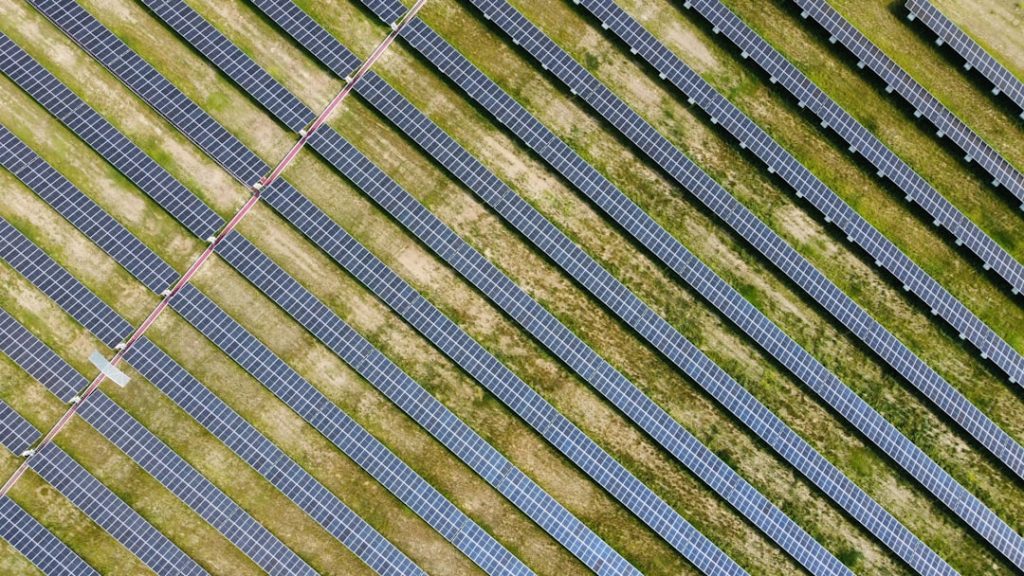
Something significant is happening in global energy markets, and the numbers are finally impossible to ignore. The clean energy transition — once dismissed as a distant policy ambition — has evolved into one of the most powerful economic forces reshaping capital allocation, industrial strategy, and geopolitical competition. From utility-scale solar farms in the American Southwest to offshore wind corridors along Europe’s Atlantic coast, the infrastructure of a post-fossil-fuel economy is being built at a pace that is outrunning even the most optimistic projections made just a few years ago.
Global investment in clean energy surpassed $1.8 trillion in the most recently tracked annual period, eclipsing spending on fossil fuel supply for the third consecutive year. That milestone matters not just symbolically, but structurally. When capital flows consistently favor one technology trajectory over another, it tends to lock in cost curves, talent pipelines, and manufacturing ecosystems that become self-reinforcing. The clean energy transition is now exhibiting exactly these dynamics, and analysts covering the sector are adjusting their long-term forecasts upward with increasing confidence.
Solar photovoltaic technology continues to anchor the transition’s momentum. Module prices have fallen more than 90% over the past decade, and the cost reductions are not yet exhausted. Manufacturers in China, India, and increasingly in the United States — spurred by domestic content incentives — are scaling next-generation cell architectures that push conversion efficiencies beyond what standard silicon panels can achieve. Utility developers and corporate buyers are locking in long-term power purchase agreements at prices that would have seemed implausible a decade ago, making new solar capacity economically superior to operating legacy coal plants in most major markets.
Wind energy, both onshore and offshore, tells a similarly compelling story. Offshore wind in particular is emerging as a cornerstone of decarbonization strategies for densely populated coastal nations where land is constrained. Turbine technology has advanced to the point where single units can generate enough electricity to power thousands of homes. The permitting and grid integration challenges that slowed early offshore development are being addressed through regulatory reform and expanded transmission planning, opening substantial new pipeline capacity across North America, Europe, and Asia-Pacific markets.
Battery storage is the variable that changes the entire equation. For years, critics of the clean energy transition pointed to intermittency as a structural ceiling — the sun doesn’t always shine, and the wind doesn’t always blow. Battery storage at grid scale is dismantling that argument with remarkable speed. Lithium iron phosphate systems are now routinely paired with solar and wind installations, enabling dispatchable renewable power that can be delivered on demand. Costs for grid-scale storage have dropped precipitously, and the technology pipeline — including sodium-ion and solid-state chemistries — suggests further declines are ahead. Markets that once relied on gas peaker plants for reliability are increasingly finding that storage-backed renewables offer a cheaper and cleaner alternative.
The policy landscape has been a crucial accelerant. The United States Inflation Reduction Act, the European Union’s Green Deal industrial framework, and similar national programs across Asia have redirected hundreds of billions of dollars toward clean energy manufacturing and deployment. These policies are not charity — they are strategic bets on industrial competitiveness. Nations that establish early dominance in solar manufacturing, battery production, and green hydrogen infrastructure are positioning themselves to export technology, attract high-value jobs, and reduce their exposure to volatile fossil fuel commodity markets. The clean energy transition is as much an economic competition as it is an environmental imperative.
Emerging markets deserve particular attention in any honest analysis of where this transition is heading. Countries across Southeast Asia, Latin America, and Sub-Saharan Africa are deploying renewable energy not as an ideological gesture but because it is now the cheapest way to build new power capacity. In many cases, these nations are leapfrogging the fossil fuel infrastructure buildout that characterized earlier industrial development. The implications for global emissions trajectories — and for equipment demand — are enormous. As financing mechanisms mature and grid infrastructure expands, the developing world’s share of clean energy investment is expected to rise substantially over the next decade.
There are real challenges that responsible analysis cannot gloss over. Supply chains for critical minerals — lithium, cobalt, nickel, and rare earth elements — remain geographically concentrated and vulnerable to disruption. Grid modernization in aging markets is expensive and politically complicated. The pace of permitting for new transmission lines consistently lags behind the pace of new generation coming online. And the financing gap in lower-income countries, where development banks have not yet mobilized capital at the required scale, remains a genuine constraint on global progress. These are solvable problems, but they require coordinated action that markets alone will not deliver.
What the data ultimately shows is that the clean energy transition has crossed a threshold from policy-dependent experiment to market-driven industrial reality. The economics are compelling, the technology is proven, and the capital is moving. Investors, policymakers, and corporations that treat this as a temporary trend rather than a structural shift do so at significant strategic risk. The transition is not coming — it is already well underway, and the opportunity window for capturing its most valuable positions is narrowing with every passing quarter.