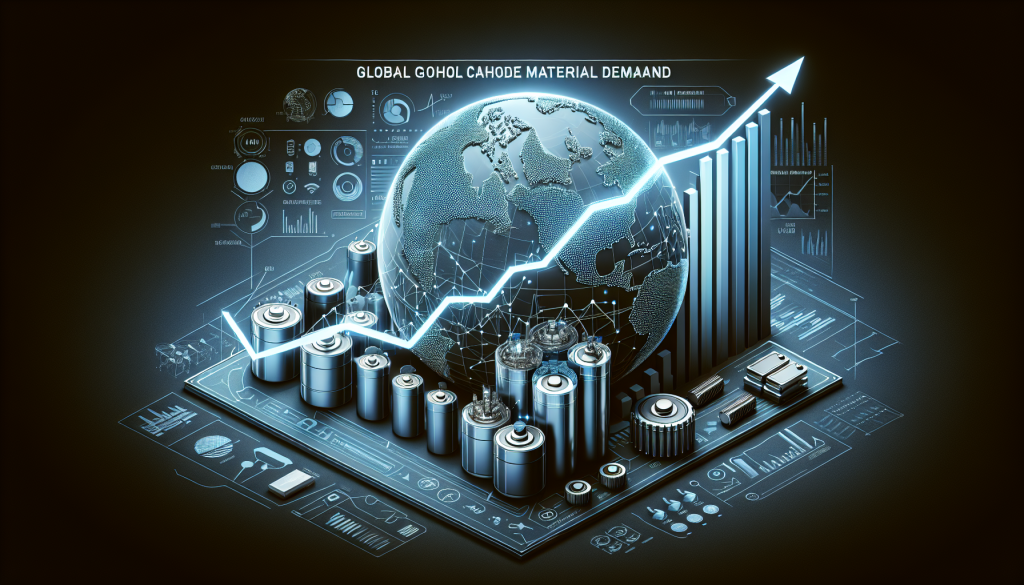
The electric vehicle revolution has created an unprecedented surge in cathode material demand, fundamentally reshaping the battery metals investment landscape. As automakers race to secure supply chains and meet ambitious electrification targets, savvy investors are positioning themselves in the critical materials that power tomorrow’s economy. Understanding these market dynamics has become essential for anyone seeking exposure to one of the most transformative sectors of our time.
Critical Materials Driving Battery Innovation
Cathode material demand centers around four key metals: lithium, nickel, cobalt, and manganese. Each plays a distinct role in battery chemistry, with lithium-ion batteries requiring specific ratios depending on their application. Nickel-rich cathodes, particularly NCM (nickel-cobalt-manganese) and NCA (nickel-cobalt-aluminum) formulations, dominate the electric vehicle market due to their superior energy density. Tesla and other leading manufacturers have pushed nickel content to 80% or higher in their latest battery packs, creating intense competition for high-grade nickel supplies.
Meanwhile, lithium iron phosphate (LFP) cathodes are gaining market share in cost-sensitive applications and energy storage systems. This shift has implications for cathode material demand patterns, as LFP batteries eliminate cobalt entirely while requiring more lithium per kilowatt-hour. Chinese manufacturers have perfected LFP technology, leading to its adoption in mass-market vehicles and grid-scale storage projects worldwide.
Supply Chain Bottlenecks and Market Dynamics
The rapid acceleration of cathode material demand has exposed critical vulnerabilities in global supply chains. Mining companies struggle to bring new projects online fast enough to meet projected needs, while processing capacity remains concentrated in China. This geographic concentration has prompted Western governments to invest heavily in domestic processing capabilities, creating new investment opportunities across the value chain.
Refining capacity presents perhaps the most significant bottleneck in meeting cathode material demand. Converting raw lithium carbonate into battery-grade lithium hydroxide requires specialized facilities that take years to develop. Similarly, nickel sulfate production for battery applications demands different processing techniques than traditional stainless steel applications. These technical requirements have created substantial moats around established players while presenting opportunities for new entrants with the right technology and capital backing.
Investment Opportunities Across the Value Chain
Smart investors are finding multiple entry points to capitalize on growing cathode material demand. Upstream mining companies offer direct commodity exposure but face development risks and capital intensity. Mid-stream processors and refiners provide leverage to cathode material demand growth while maintaining some protection from raw material price volatility. These companies often secure long-term contracts with battery manufacturers, providing more predictable cash flows than pure-play miners.
Downstream opportunities include cathode manufacturers themselves, many of which have become strategic partners to major battery producers. Companies like CATL, LG Energy Solution, and emerging Western players are investing billions in cathode production capacity. Additionally, recycling companies represent a compelling long-term play, as the first wave of EV batteries reaches end-of-life and creates a secondary supply source for critical materials.
Future Demand Projections and Technology Shifts
Analysts project cathode material demand will grow at compound annual growth rates exceeding 25% through the decade, driven primarily by electric vehicle adoption and energy storage deployment. However, technology evolution adds complexity to these projections. Solid-state batteries, while still years from commercial deployment, could alter material requirements significantly. Similarly, advances in battery recycling could reduce primary material needs over time.
Regional demand patterns are also shifting as battery manufacturing capacity expands beyond Asia. European and North American gigafactory construction has accelerated dramatically, creating new demand centers and potentially shorter, more secure supply chains. These developments favor suppliers with geographic diversification and the flexibility to serve multiple markets.
The cathode material demand story represents more than just a commodity cycle – it’s the foundation of the clean energy transition. While short-term volatility will continue as supply and demand rebalance, the long-term trajectory remains compelling for investors who understand the technology trends and supply chain dynamics at play. Those who position themselves thoughtfully across this value chain today may benefit from one of the most significant industrial transformations in modern history.