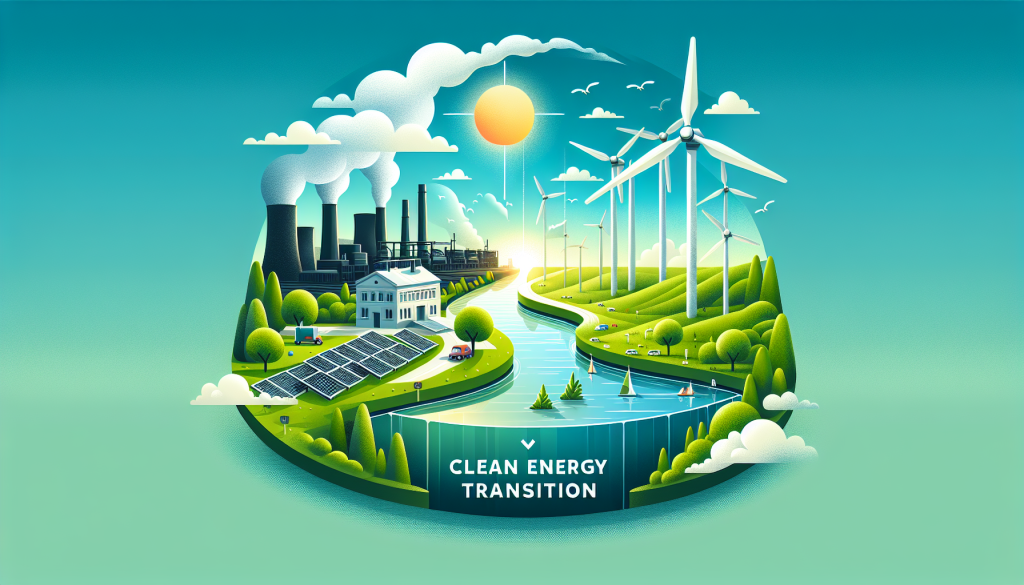
The global clean energy transition has reached an unprecedented inflection point, with investment capital flowing into renewable technologies at record-breaking rates. What began as an environmental imperative has evolved into one of the most compelling economic opportunities of our time, fundamentally reshaping energy markets worldwide. As traditional fossil fuel infrastructure faces mounting pressure from both regulatory frameworks and market forces, clean energy solutions are demonstrating not just environmental benefits, but superior returns on investment that are attracting institutional investors, governments, and corporations alike.
Market Dynamics Driving Clean Energy Investment Growth
The clean energy transition is being propelled by a convergence of technological breakthroughs, policy support, and shifting economic fundamentals. Solar photovoltaic costs have plummeted by over 85% since 2010, while wind energy has achieved similar cost reductions, making renewables the cheapest source of electricity in most global markets. This cost competitiveness has triggered a massive reallocation of capital, with clean energy investments reaching $2.8 trillion globally, representing a 15% increase from previous periods.
Grid-scale energy storage technologies have emerged as a critical enabler of this transformation, addressing the intermittency challenges that previously limited renewable deployment. Battery storage costs have declined by 90% over the past decade, while new technologies like green hydrogen production are creating entirely new market segments. These technological advances are supported by increasingly ambitious government policies, including the Inflation Reduction Act in the United States, the European Green Deal, and China’s carbon neutrality commitments, which collectively represent over $4 trillion in clean energy incentives and mandates.
Renewable Technology Sectors Experiencing Explosive Growth
Within the broader clean energy transition, several technology sectors are experiencing particularly rapid expansion. Offshore wind development has emerged as a major growth driver, with global capacity expected to increase fivefold by 2030. Advanced floating wind platforms are unlocking deepwater resources previously considered inaccessible, expanding the addressable market significantly. Similarly, distributed solar installations combined with smart grid technologies are enabling a fundamental shift toward decentralized energy systems.
Electric vehicle integration is creating new demand patterns that complement renewable energy generation profiles. Vehicle-to-grid technologies are transforming EVs from simple energy consumers into mobile storage assets, providing grid stabilization services while creating additional revenue streams for vehicle owners. This symbiotic relationship between transportation electrification and renewable energy deployment is accelerating the clean energy transition across multiple sectors simultaneously.
Regional Market Leaders and Emerging Opportunities
Asia-Pacific continues to dominate global clean energy capacity additions, accounting for approximately 60% of new renewable installations. China leads in manufacturing scale and deployment volumes, while countries like India and Vietnam are rapidly expanding their renewable portfolios. Europe maintains leadership in offshore wind development and green hydrogen initiatives, with the North Sea emerging as a major renewable energy hub serving multiple countries through interconnected transmission infrastructure.
Emerging markets present the most significant growth opportunities for the clean energy transition, as many developing economies can leapfrog traditional fossil fuel infrastructure entirely. Africa’s abundant solar and wind resources, combined with declining technology costs, are attracting billions in development capital. Latin America is leveraging its hydroelectric expertise to develop complementary renewable technologies, creating some of the world’s most cost-effective clean energy systems.
Investment Trends and Financial Market Integration
The clean energy transition is fundamentally reshaping global capital markets, with Environmental, Social, and Governance (ESG) criteria becoming standard investment considerations. Green bonds have emerged as a preferred financing mechanism, with issuances exceeding $500 billion annually. Institutional investors are increasingly viewing clean energy assets as essential portfolio components, driven by both risk management considerations and superior long-term return potential.
Private equity and venture capital are flowing into clean technology startups at unprecedented levels, funding innovations in areas like advanced materials, energy management software, and next-generation storage solutions. Corporate power purchase agreements (PPAs) have become mainstream risk management tools, with Fortune 500 companies contracting for over 100 GW of renewable energy capacity. This corporate demand provides long-term revenue certainty that supports continued clean energy project development and financing.
The momentum behind the clean energy transition appears irreversible, driven by compelling economics rather than solely environmental considerations. As technology costs continue declining and policy support remains robust, clean energy markets are positioned for sustained growth that will fundamentally transform the global energy landscape. Investors, policymakers, and industry participants who recognize and act upon these trends will be best positioned to capitalize on what represents one of the largest economic transformations in modern history.