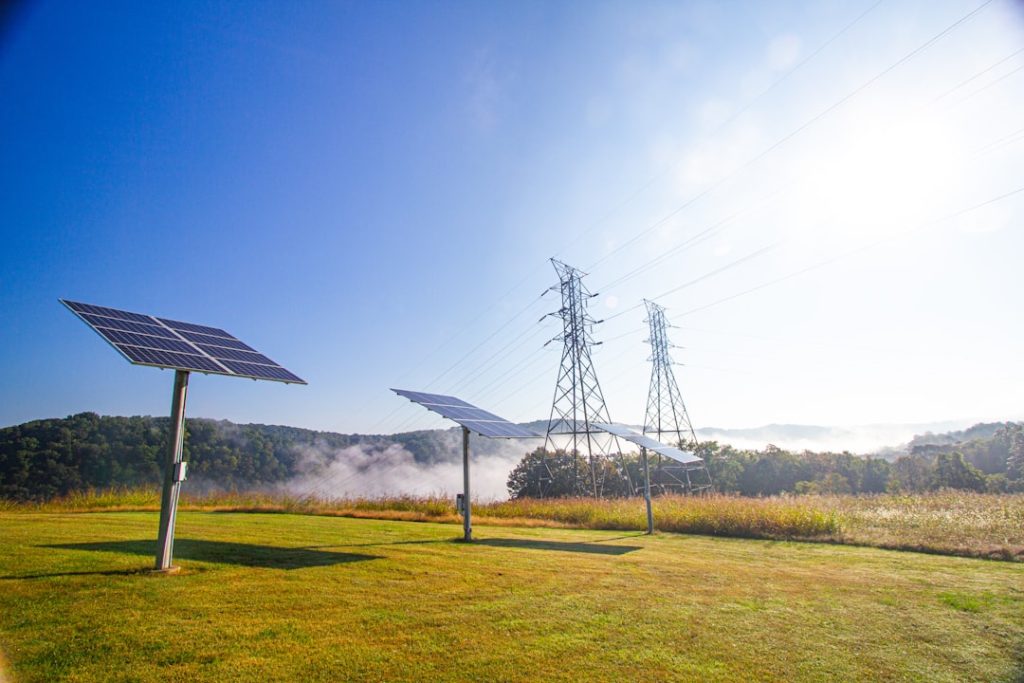
The global energy sector is experiencing its most dramatic transformation in over a century, with the clean energy transition fundamentally altering how nations generate, distribute, and consume power. What began as an environmental imperative has evolved into an economic revolution that’s redefining geopolitical relationships, creating new industrial powerhouses, and establishing entirely new market dynamics.
This unprecedented shift represents more than just a technological upgrade—it’s a complete reimagining of the world’s most critical infrastructure. From Silicon Valley boardrooms to manufacturing floors in Southeast Asia, the ripple effects of this transition are creating winners and losers while establishing new rules for global competition.
Investment Capital Flows Reshape Energy Markets
The financial backbone of the clean energy transition has reached extraordinary proportions, with global renewable energy investments now consistently outpacing fossil fuel spending by margins that would have seemed impossible just a decade ago. Recent data shows that clean energy projects are attracting over $2.8 trillion annually in global investment, representing a fundamental shift in how capital markets view energy infrastructure.
This massive capital reallocation is creating cascading effects across traditional energy markets. Oil and gas companies are increasingly diversifying their portfolios, while sovereign wealth funds are restructuring their long-term strategies around renewable assets. The transformation extends beyond pure-play renewable companies to encompass everything from battery manufacturers and smart grid technologies to electric vehicle charging networks and green hydrogen production facilities.
Perhaps most significantly, this investment boom is democratizing energy production. Unlike traditional fossil fuel projects that require massive upfront capital and specialized expertise, distributed renewable systems are enabling smaller players to participate in energy generation, fundamentally altering market concentration patterns that have dominated the industry for generations.
Technological Breakthroughs Accelerate Industry Transformation
The pace of innovation driving the clean energy transition has reached a critical inflection point where technological advances are occurring faster than market analysts can incorporate them into their projections. Solar panel efficiency rates continue climbing while costs plummet, with recent breakthroughs in perovskite tandem cells promising to push conversion rates beyond 30% at commercial scale.
Battery storage technology represents another revolutionary force reshaping energy markets. Advanced lithium-ion systems, complemented by emerging alternatives like solid-state batteries and flow storage solutions, are solving the intermittency challenges that previously limited renewable adoption. These developments are enabling grid-scale storage projects that can balance supply and demand across entire regions, making renewable energy sources viable for baseload power generation.
Smart grid technologies are amplifying these advances by creating intelligent distribution networks that can optimize energy flows in real-time. Machine learning algorithms now predict consumption patterns with remarkable accuracy, while blockchain-based systems enable peer-to-peer energy trading that bypasses traditional utility monopolies entirely.
Geopolitical Power Structures Face Fundamental Realignment
The clean energy transition is redistributing global influence in ways that extend far beyond traditional energy markets. Countries with abundant renewable resources—particularly those with optimal solar and wind conditions—are emerging as new energy superpowers, while traditional oil-dependent economies face existential challenges to their geopolitical relevance.
This shift is particularly evident in international trade relationships. Nations investing heavily in renewable manufacturing capabilities are capturing increasingly larger shares of the clean energy supply chain, from rare earth mineral processing to advanced battery production. China’s dominance in solar panel manufacturing, Europe’s leadership in offshore wind technology, and emerging players like India in green hydrogen production are creating new centers of technological influence.
Resource-rich developing nations are leveraging their renewable potential to attract foreign investment and industrial development, fundamentally altering traditional aid and development relationships. Countries across Africa and Latin America are positioning themselves as future clean energy exporters, using their natural advantages to build domestic manufacturing capabilities and technological expertise.
Economic Sectors Experience Widespread Disruption
The ripple effects of the clean energy transition extend far beyond the energy sector itself, creating disruption and opportunity across virtually every segment of the global economy. Transportation systems are undergoing complete electrification, with electric vehicle adoption rates exceeding even the most optimistic projections from earlier this decade.
Heavy industry is experiencing equally dramatic changes as companies seek to decarbonize their operations. Steel production, cement manufacturing, and chemical processing—traditionally among the most carbon-intensive activities—are incorporating renewable energy sources and developing entirely new production processes that eliminate fossil fuel dependencies.
The agricultural sector is discovering unexpected opportunities within the clean energy transition, with agrivoltaics projects combining food production with solar energy generation. These dual-use systems are proving especially valuable in water-stressed regions where they provide crop protection while generating clean electricity.
Financial services are evolving rapidly to support these changes, with green bonds, sustainability-linked loans, and climate risk assessments becoming standard tools across the industry. Insurance companies are recalibrating their models to account for both climate-related risks and the economic opportunities presented by clean energy investments.
The clean energy transition has moved beyond the realm of environmental policy to become the defining economic story of our time. As technological capabilities continue expanding while costs decline, this transformation is accelerating at a pace that’s reshaping not just how we power our civilization, but how we organize our economies and societies. The organizations, nations, and individuals who recognize and adapt to these changes will find themselves at the center of the most significant economic opportunity in modern history.