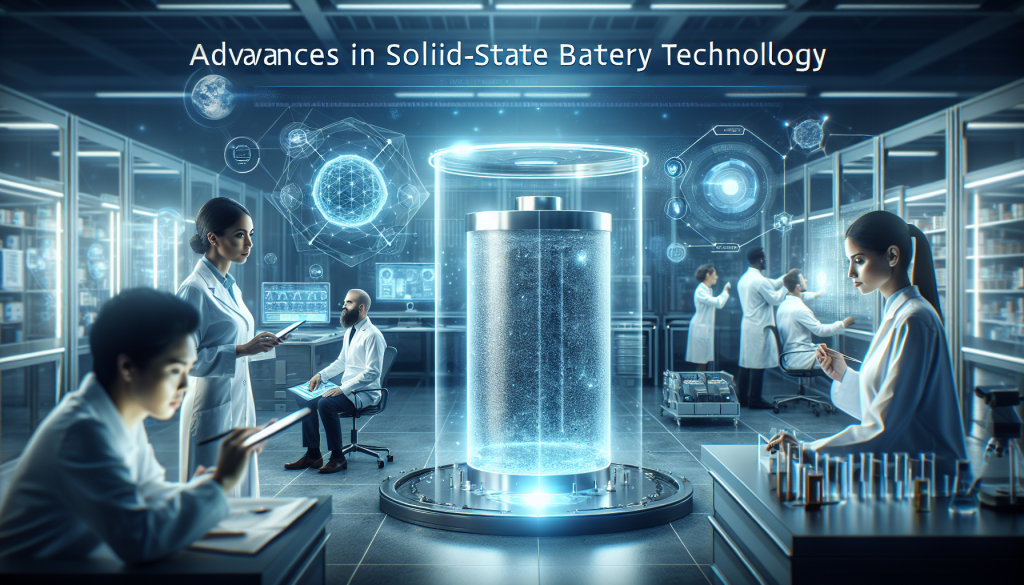
The energy sector is experiencing a fundamental transformation as solid-state battery technology emerges from laboratory prototypes to commercial reality. This groundbreaking solid-state battery advance represents more than an incremental improvement—it’s a paradigm shift that promises to solve the most pressing challenges in energy storage, from electric vehicle range anxiety to grid-scale renewable energy integration.
Unlike traditional lithium-ion batteries that rely on liquid electrolytes, solid-state batteries utilize solid electrolytes, eliminating many safety concerns while dramatically improving performance metrics. This solid-state battery advance delivers energy densities up to three times higher than conventional batteries, enabling electric vehicles to achieve ranges exceeding 1,000 miles on a single charge. Major automotive manufacturers have reported breakthrough results in their testing facilities, with some prototypes demonstrating charging times of less than ten minutes for 80% capacity.
The implications extend far beyond transportation. Renewable energy systems have long struggled with storage limitations that make solar and wind power less reliable during peak demand periods. The solid-state battery advance addresses this challenge by providing storage solutions that maintain efficiency over thousands of charge cycles without the thermal runaway risks associated with traditional batteries. Grid operators can now deploy massive battery arrays that store excess renewable energy during peak production and release it during high-demand periods.
Consumer electronics represent another frontier where this technology is creating ripple effects. Smartphones and laptops equipped with solid-state batteries demonstrate battery life measured in days rather than hours, while maintaining form factors even thinner than current designs. The solid-state battery advance eliminates the swelling and degradation issues that have plagued mobile devices, potentially extending device lifespans by several years.
Manufacturing scalability has been the primary hurdle preventing widespread adoption, but recent developments in production techniques are changing this landscape. Advanced ceramic processing methods and novel thin-film deposition technologies have reduced manufacturing costs by more than 60% compared to early prototypes. Several facilities across North America and Asia are ramping up production capacity, with industry analysts projecting cost parity with traditional batteries within the next eighteen months.
The geopolitical implications of this solid-state battery advance cannot be overlooked. Countries heavily dependent on fossil fuel imports are viewing this technology as a path to energy independence. Nations with established renewable energy infrastructure can leverage superior storage capabilities to become net energy exporters, fundamentally altering global energy trade relationships.
Safety improvements represent perhaps the most significant advantage of solid-state technology. Traditional batteries have faced scrutiny due to fire risks and toxic gas emissions during failure scenarios. The solid-state battery advance eliminates these concerns through inherently stable chemistry that cannot support combustion, making them suitable for applications previously considered too risky for battery deployment.
Investment capital is flowing into solid-state battery development at unprecedented levels, with venture funding exceeding $4.2 billion across the sector. Major technology companies are establishing strategic partnerships with battery manufacturers, recognizing that this solid-state battery advance will determine competitive positioning across multiple industries for the coming decades.
The convergence of improved manufacturing processes, proven performance benefits, and massive market demand is creating a perfect storm for rapid adoption. As solid-state battery advance continues accelerating, we’re witnessing the emergence of an energy storage ecosystem that will fundamentally reshape how society generates, stores, and consumes power across every sector of the global economy.