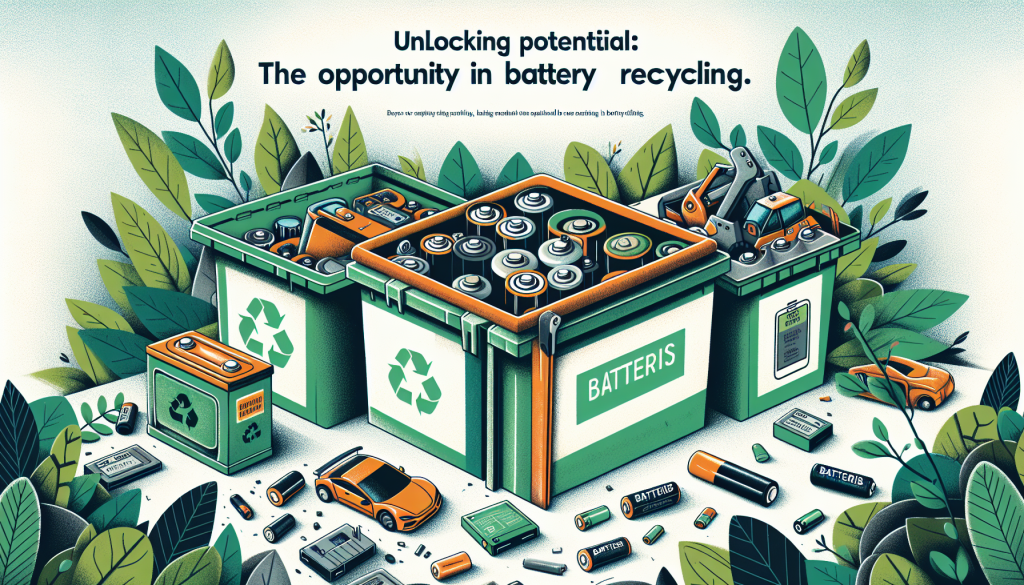
The electric vehicle revolution has created an unprecedented demand for lithium, pushing global supply chains to their limits and sparking concerns about resource scarcity. However, a transformative force is quietly reshaping this landscape: the emerging battery recycling opportunity that promises to revolutionize how we think about lithium supply and sustainability in the energy transition.
Traditional lithium extraction has long dominated supply chains, with mining operations in Australia, Chile, and Argentina providing the bulk of global lithium carbonate. Yet this model faces mounting challenges, from environmental concerns to geopolitical tensions and the sheer time required to bring new mining projects online. As electric vehicle adoption accelerates and energy storage systems proliferate, the gap between supply and demand has widened dramatically, creating both price volatility and supply security risks.
The battery recycling opportunity emerges as a game-changing solution to these challenges. Unlike mining operations that can take five to ten years to develop, recycling facilities can be established and scaled relatively quickly. More importantly, recycled lithium can be recovered at purities exceeding 95%, making it virtually indistinguishable from newly mined material. This technical advancement has fundamentally altered the economics of lithium supply, creating a secondary market that industry analysts predict could supply up to 30% of global lithium demand within the next decade.
Current recycling technologies have matured significantly, with companies like Redwood Materials, Li-Cycle, and Umicore developing sophisticated processes that can recover not just lithium, but also cobalt, nickel, and manganese from spent batteries. These multi-metal recovery operations create compelling economic incentives, as the combined value of recovered materials often exceeds the cost of processing. The battery recycling opportunity thus represents more than environmental stewardship—it’s become a profitable business model that attracts significant investment capital.
The impact on global lithium pricing has been profound. Traditional supply-demand models that relied solely on mining output are being disrupted as recycled lithium enters the market at competitive prices. During recent price spikes in lithium carbonate, recycled material provided crucial price relief to battery manufacturers, demonstrating the stabilizing effect of this alternative supply source. Major automakers, including Tesla, GM, and BMW, have established long-term contracts with recycling companies, recognizing the strategic importance of securing diversified lithium supplies.
Geographic implications are equally significant. Countries with large electric vehicle fleets but limited lithium mining resources are discovering that the battery recycling opportunity can reduce their dependence on lithium imports. The European Union, Japan, and South Korea have implemented aggressive recycling targets and invested heavily in domestic recycling capacity. This shift toward regional recycling hubs is reshaping global trade patterns and reducing the geopolitical risks associated with concentrated mining operations.
Environmental considerations further amplify the battery recycling opportunity’s impact on lithium markets. Mining operations face increasing regulatory scrutiny and community opposition, particularly in water-stressed regions where lithium extraction can affect local water supplies. Recycling operations, by contrast, generate minimal environmental impact while reducing the need for new mining projects. This regulatory advantage is becoming increasingly important as governments worldwide tighten environmental standards for extractive industries.
The economic ripple effects extend throughout the supply chain. Battery manufacturers are redesigning products to facilitate easier recycling, creating design standards that prioritize material recovery. Mining companies are adapting by investing in recycling technologies and forming partnerships with recyclers, recognizing that the future lithium market will be hybrid—combining traditional extraction with sophisticated recycling operations. Some mining giants have acquired recycling companies outright, positioning themselves as integrated lithium suppliers rather than pure extractors.
Technological advances continue to enhance the battery recycling opportunity’s competitive position. New hydrometallurgical processes are reducing energy consumption while increasing recovery rates. Artificial intelligence and automation are improving sorting efficiency, enabling processors to handle mixed battery chemistries more effectively. These innovations are driving down costs while scaling up capacity, making recycled lithium increasingly attractive to battery manufacturers focused on cost optimization.
Market forecasts suggest this trend will accelerate as the first generation of electric vehicle batteries reaches end-of-life. Industry experts estimate that by 2030, the volume of batteries available for recycling will increase tenfold, creating a massive feedstock supply for recycling operations. This incoming wave of recyclable material will further enhance the battery recycling opportunity’s role in global lithium supply chains, potentially creating regional oversupply in some markets while providing price stability in others.
The transformation of global lithium markets through the battery recycling opportunity represents more than an industrial shift—it’s a fundamental reimagining of resource sustainability in the clean energy economy. As recycling technologies mature and volumes scale, this circular approach to lithium supply is proving that environmental responsibility and economic efficiency can align powerfully, creating a more resilient and sustainable foundation for the electric future that continues to unfold worldwide.