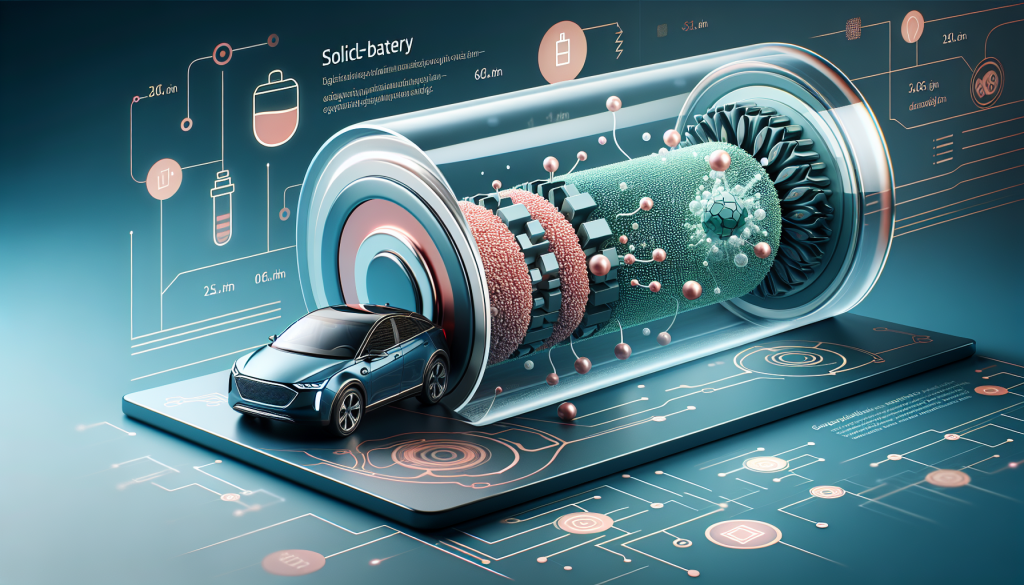
The clean energy sector is experiencing a transformative moment as breakthrough developments in battery technology promise to revolutionize how we store and deploy renewable power. Recent solid-state battery advance achievements have captured the attention of investors, manufacturers, and energy analysts worldwide, signaling a potential shift in the fundamental economics of clean energy storage.
Unlike traditional lithium-ion batteries that rely on liquid electrolytes, solid-state batteries utilize solid electrolyte materials that offer superior energy density, enhanced safety profiles, and significantly longer lifespans. This solid-state battery advance represents more than incremental improvement—it’s a technological leap that addresses the most persistent challenges facing electric vehicle adoption and grid-scale energy storage deployment.
Market analysts are closely monitoring the commercial viability timeline for these next-generation energy storage solutions. Current projections suggest that manufacturing costs, while initially higher than conventional batteries, could achieve price parity within the next three to five years as production scales increase. The solid-state battery advance has already attracted over $15 billion in committed investment from automotive manufacturers alone, with companies like Toyota, BMW, and Ford establishing dedicated production partnerships.
The implications extend far beyond the automotive sector. Grid storage applications represent perhaps the most significant opportunity, as solid-state batteries can operate efficiently across wider temperature ranges and maintain capacity through thousands more charge cycles than current technology. This durability factor fundamentally alters the economics of renewable energy integration, making solar and wind power more practical for baseload electricity generation.
Energy density improvements associated with this solid-state battery advance could increase electric vehicle range by 40-60% while reducing charging times to under ten minutes for practical driving distances. These performance gains address two primary consumer concerns that have limited EV adoption: range anxiety and charging convenience. Market research indicates that achieving these benchmarks could accelerate electric vehicle market penetration from the current 18% to over 50% of new vehicle sales within a decade.
Investment flows into solid-state battery companies have intensified significantly, with venture capital and strategic corporate funding reaching record levels. Several startups specializing in solid-state battery advance research have achieved unicorn valuations, while established battery manufacturers are pivoting substantial resources toward solid-state production capabilities. This capital influx is accelerating research timelines and bringing commercial deployment closer to reality.
The geopolitical implications of widespread solid-state battery advance adoption are equally noteworthy. Countries and regions that successfully establish manufacturing capabilities for these batteries will likely secure significant advantages in the global clean energy transition. China, Japan, South Korea, and the United States are all investing heavily in domestic solid-state battery production capacity, viewing it as critical infrastructure for energy independence.
Supply chain considerations present both challenges and opportunities within the solid-state battery advance ecosystem. While these batteries require some specialized materials, they significantly reduce dependence on cobalt and other conflict minerals that have raised ethical and supply security concerns in traditional battery manufacturing. This shift could democratize battery production and reduce the geopolitical leverage of current mineral-rich regions.
Manufacturing scalability remains the primary hurdle preventing immediate market transformation. Current solid-state battery advance prototypes demonstrate excellent performance characteristics in laboratory conditions, but transitioning to mass production presents engineering challenges that require substantial capital investment and time. Industry experts estimate that achieving gigawatt-scale production will require at least two to three years of intensive development.
The solid-state battery advance phenomenon is fundamentally reshaping clean energy market dynamics, creating new investment opportunities while potentially disrupting established players in the energy storage value chain. As technical challenges yield to engineering solutions and production costs decline, these revolutionary batteries appear positioned to unlock the full potential of renewable energy systems, electric transportation, and portable electronics. The convergence of improving performance metrics, declining costs, and substantial investment commitments suggests that the clean energy market is approaching an inflection point that could define the next decade of technological and economic development.