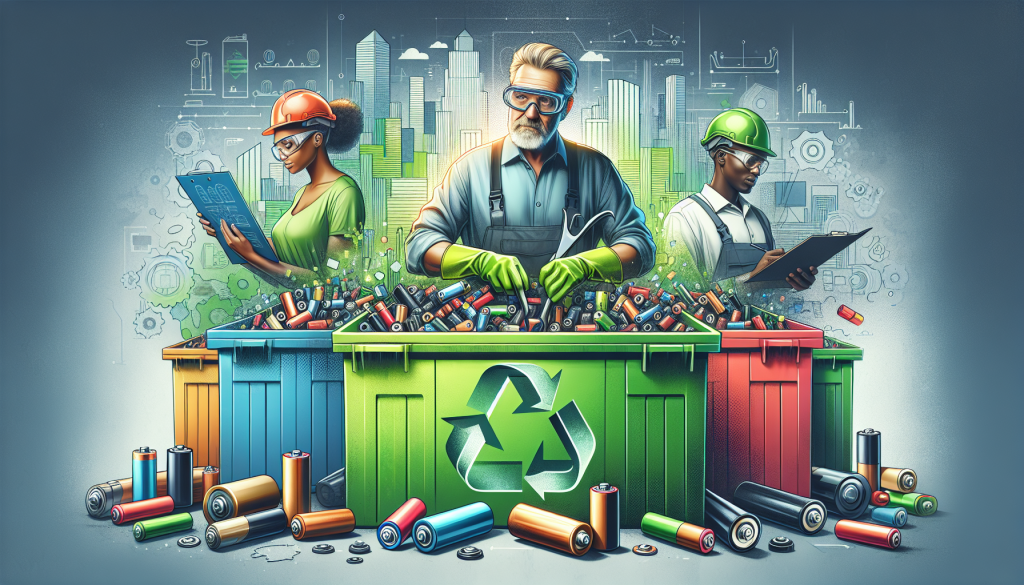
The global lithium market is experiencing a fundamental shift as battery recycling emerges as a game-changing force in supply chain dynamics. This battery recycling opportunity is not merely an environmental initiative—it’s becoming a strategic imperative that could reshape how the world sources critical materials for electric vehicles, energy storage systems, and consumer electronics.
Traditional lithium supply chains have long depended on mining operations concentrated in a handful of countries, creating geopolitical vulnerabilities and environmental concerns. Chile, Australia, and Argentina control approximately 75% of global lithium reserves, making the supply chain susceptible to political instability, trade disputes, and extraction limitations. However, the maturation of battery recycling technology is offering manufacturers and governments an alternative pathway to secure lithium supplies while reducing environmental impact.
Recent advances in hydrometallurgical and direct recycling processes have dramatically improved lithium recovery rates from spent batteries. Industry data shows that modern recycling facilities can now recover up to 95% of lithium from end-of-life batteries, compared to just 50-60% recovery rates achieved through older pyrometallurgical methods. This efficiency improvement makes the battery recycling opportunity economically viable at scale, with recycled lithium production costs now competitive with mined lithium in many markets.
The timing of this technological breakthrough aligns perfectly with market conditions. Electric vehicle adoption has accelerated beyond most projections, with global EV sales reaching 14.8 million units in 2023 and continuing to climb. As first-generation EV batteries begin reaching end-of-life status, the volume of recyclable lithium is expanding exponentially. McKinsey estimates suggest that by 2030, battery recycling could supply 15-20% of global lithium demand, rising to potentially 40% by 2040 as the installed base of batteries grows.
Major automakers and battery manufacturers are recognizing this shift and investing heavily in recycling infrastructure. Tesla’s Nevada Gigafactory has integrated battery recycling capabilities directly into its production line, creating a closed-loop system that reduces reliance on virgin materials. Similarly, CATL and BYD have announced multi-billion dollar investments in recycling facilities across Asia, while European companies like Northvolt are building what they term “cradle-to-cradle” battery production ecosystems.
The economic implications extend beyond simple supply diversification. Recycled lithium production offers several advantages over traditional mining: significantly lower water usage, reduced carbon emissions, and shorter lead times from decision to production. Mining new lithium deposits typically requires 5-7 years from discovery to commercial production, while recycling facilities can be operational within 18-24 months. This agility is crucial in a rapidly evolving market where demand projections continue to outpace supply planning.
Government policies are accelerating the battery recycling opportunity through regulatory frameworks and financial incentives. The European Union’s Battery Regulation, which mandates minimum recycled content in new batteries, is creating guaranteed demand for recycled materials. China has implemented similar policies, while the United States is offering tax credits and grants for domestic recycling operations through the Inflation Reduction Act. These policy frameworks provide the regulatory certainty needed for large-scale capital investments in recycling infrastructure.
The impact on lithium pricing has already become apparent. Spot lithium prices, which reached historic highs above $80,000 per metric ton in early 2022, have moderated significantly as market participants factor in future recycled supply. Forward curves now reflect an expectation that recycled lithium will help balance supply and demand dynamics, reducing the extreme price volatility that has characterized the market in recent years.
Regional supply security is another critical factor driving investment in battery recycling. Countries heavily dependent on lithium imports are viewing recycling as a strategic asset for energy security. Japan has committed to achieving 50% lithium self-sufficiency through recycling by 2030, while South Korea is targeting 40% domestic supply through similar initiatives. These national strategies recognize that the battery recycling opportunity offers a path to reduced import dependence and enhanced supply chain resilience.
Looking ahead, the convergence of technological advancement, economic viability, and policy support is positioning battery recycling as a cornerstone of future lithium supply strategies. As recycling infrastructure scales and improves, the global lithium market is transitioning from a linear extraction model to a circular economy approach. This transformation promises to deliver more stable pricing, reduced environmental impact, and enhanced supply security—fundamentally altering the dynamics of one of the world’s most critical material markets.