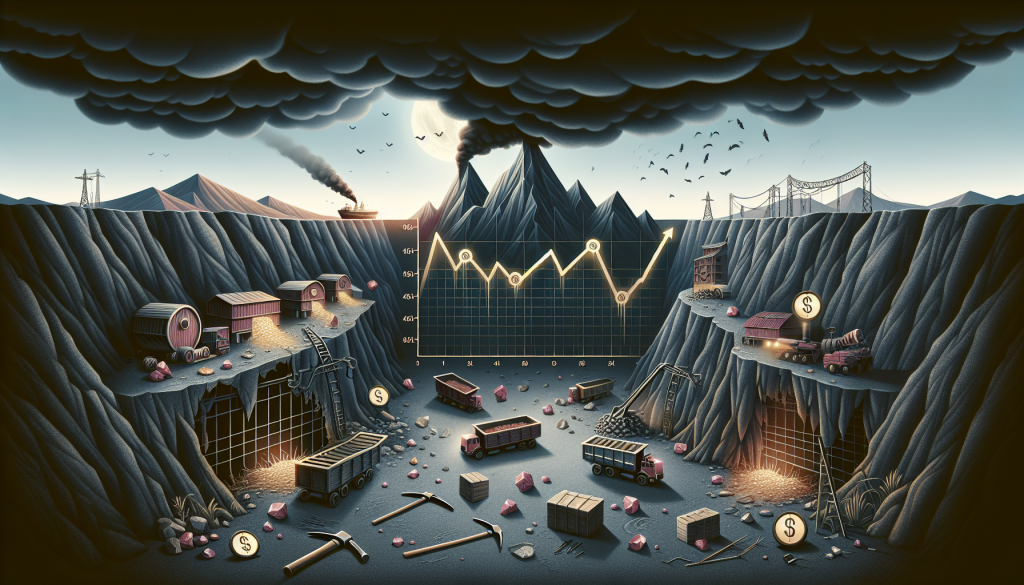
A growing critical mineral shortage is fundamentally reshaping global supply chains, with lithium prices surging 340% over the past two years and rare earth elements experiencing unprecedented volatility. This supply crunch extends far beyond simple market dynamics, threatening the foundation of the green energy transition and forcing governments worldwide to reassess their strategic mineral dependencies.
The lithium market exemplifies the broader critical mineral shortage challenge facing industries today. Despite massive investments in new extraction facilities across Australia, Chile, and Argentina, production capacity continues to lag behind exploding demand from electric vehicle manufacturers and battery storage systems. Tesla, BYD, and other major automakers have reported production delays directly attributable to lithium carbonate availability, with some facilities operating at just 70% capacity due to material constraints.
Rare earth elements present an even more complex dimension of the critical mineral shortage crisis. China’s dominance in rare earth processing—controlling approximately 85% of global refining capacity—has created significant vulnerabilities for Western manufacturers. Recent export restrictions on gallium and germanium have sent shockwaves through semiconductor and solar panel industries, highlighting how quickly geopolitical tensions can exacerbate existing supply constraints.
The cobalt supply situation adds another layer of complexity to the critical mineral shortage landscape. Democratic Republic of Congo produces nearly 70% of the world’s cobalt, yet mining infrastructure remains underdeveloped and politically unstable. Major battery manufacturers have invested billions in alternative chemistries like lithium iron phosphate (LFP) to reduce cobalt dependency, but these substitutions often require other critical minerals that face their own supply challenges.
Government responses to the critical mineral shortage have accelerated dramatically, with the United States investing $3.1 billion through the Defense Production Act to boost domestic processing capabilities. The European Union’s Critical Raw Materials Act aims to secure 10% of annual consumption through domestic extraction by 2030, while establishing strategic reserves for essential materials. Australia has emerged as a key partner in these efforts, leveraging its vast mineral resources to challenge Chinese processing dominance.
Innovation in recycling and urban mining represents a promising avenue for addressing critical mineral shortage concerns. Companies like Redwood Materials and Li-Cycle have developed sophisticated processes to recover lithium, cobalt, and nickel from spent batteries, potentially supplying 20-30% of future demand. However, the recycling industry faces its own scaling challenges, requiring substantial infrastructure investments and regulatory frameworks that don’t yet exist in many regions.
The automotive sector’s response to critical mineral shortage pressures has driven remarkable technological advancement. Ford’s partnership with multiple lithium suppliers across three continents exemplifies the industry’s push toward supply chain diversification. Meanwhile, solid-state battery development promises to reduce reliance on several critical minerals while improving energy density and safety characteristics.
Financial markets have begun pricing in the long-term implications of critical mineral shortage dynamics, with mining stocks experiencing extraordinary volatility and lithium futures becoming increasingly important hedging instruments. Institutional investors are pouring capital into exploration projects previously considered economically marginal, while sovereign wealth funds establish strategic mineral reserves as geopolitical assets.
The trajectory of global critical mineral shortage challenges will likely determine the pace of energy transition over the next decade. While short-term disruptions continue creating headaches for manufacturers and consumers, the crisis has catalyzed unprecedented innovation in mining technology, material science, and supply chain management. Companies and countries that successfully navigate these constraints while building resilient mineral supply chains will emerge as leaders in the post-carbon economy, making strategic mineral security as important as traditional energy independence.