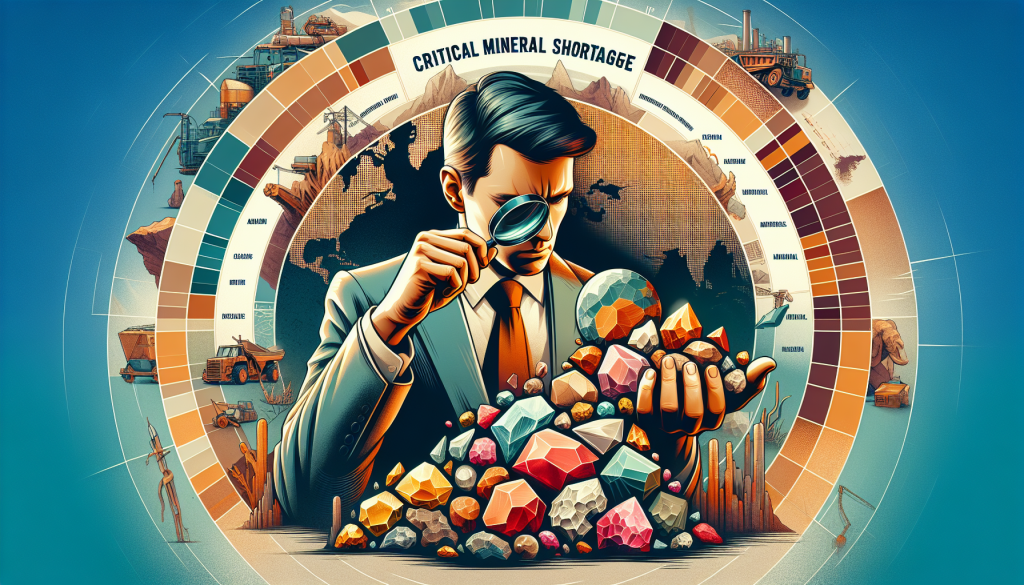
The electric vehicle revolution promised to transform transportation and reduce carbon emissions, but an unexpected bottleneck has emerged that threatens to derail these ambitious plans. A critical mineral shortage is creating unprecedented disruptions across global lithium supply chains, forcing manufacturers to reconsider production timelines and governments to reassess their green energy strategies.
Lithium, often called “white gold” for its essential role in battery technology, depends on a complex ecosystem of supporting minerals and processing materials. While much attention focuses on lithium extraction itself, the shortage of critical minerals like nickel, cobalt, manganese, and rare earth elements used in lithium processing and battery manufacturing has created a cascading crisis throughout the supply chain.
The scope of this critical mineral shortage extends far beyond simple supply and demand imbalances. Geopolitical tensions have intensified the problem, with major producing nations implementing export restrictions on key minerals. China controls approximately 60% of global rare earth element production, while the Democratic Republic of Congo dominates cobalt supplies with over 70% of global output. When these nations adjust their export policies or face internal disruptions, the ripple effects reach every corner of the lithium battery industry.
Processing capabilities represent another crucial constraint exacerbating the critical mineral shortage. Even when raw materials are available, the specialized facilities needed to refine these minerals into battery-grade components operate at capacity limits. Building new processing plants requires years of planning, substantial capital investment, and complex environmental approvals. This infrastructure lag means that even as mining operations expand, the bottleneck simply shifts to the processing stage.
Battery manufacturers are feeling the immediate impact of this critical mineral shortage through volatile pricing and supply uncertainty. Nickel prices surged by over 40% in recent months due to supply constraints from major producing regions. Similarly, high-grade lithium carbonate prices have experienced dramatic swings as producers struggle to secure consistent supplies of the processing chemicals and supporting minerals needed for purification. These price fluctuations force manufacturers to either absorb higher costs or pass them along to consumers, potentially slowing electric vehicle adoption rates.
The automotive industry has responded to the critical mineral shortage by fundamentally restructuring their supply chain strategies. Major manufacturers are investing billions in vertical integration, purchasing stakes in mining operations and processing facilities to secure long-term access to essential materials. Others are diversifying their battery chemistry approaches, developing lithium iron phosphate batteries that require fewer scarce minerals, though often with trade-offs in energy density and performance.
Recycling has emerged as a critical strategy for addressing the mineral shortage, but current capabilities remain limited. While lithium itself can be recovered from spent batteries, extracting and purifying the supporting minerals requires sophisticated processes that are still being scaled up. Industry experts estimate that recycling could potentially supply 20-30% of critical mineral demand by the early 2030s, but this requires massive investments in recycling infrastructure and technology development.
Government policies worldwide are adapting to address the critical mineral shortage through strategic initiatives and international partnerships. The United States has designated lithium and its supporting minerals as critical to national security, while the European Union has launched the Critical Raw Materials Act to reduce dependency on single-source suppliers. These policies include funding for domestic mining projects, research into alternative materials, and diplomatic efforts to secure diverse supply partnerships.
Innovation in battery technology offers potential long-term solutions to the critical mineral shortage challenge. Researchers are developing solid-state batteries that could reduce reliance on liquid electrolytes containing scarce minerals, while others explore sodium-ion and aluminum-air technologies as alternatives to traditional lithium-ion systems. However, these technologies remain years away from commercial viability at the scale needed to address current shortages.
The energy storage sector beyond automotive applications faces similar constraints from the critical mineral shortage. Grid-scale battery installations essential for renewable energy integration compete with electric vehicle manufacturers for the same limited supplies of processing materials and supporting minerals. This competition intensifies pricing pressures and extends delivery timelines for both sectors.
Looking ahead, the critical mineral shortage affecting global lithium supply represents both a significant challenge and a catalyst for innovation across the energy transition. While short-term disruptions will likely continue as supply chains adjust to unprecedented demand growth, the crisis is accelerating investments in alternative technologies, recycling capabilities, and supply chain diversification that could ultimately create a more resilient and sustainable mineral economy. The companies and countries that successfully navigate this transition period will likely emerge as leaders in the next phase of the clean energy revolution.