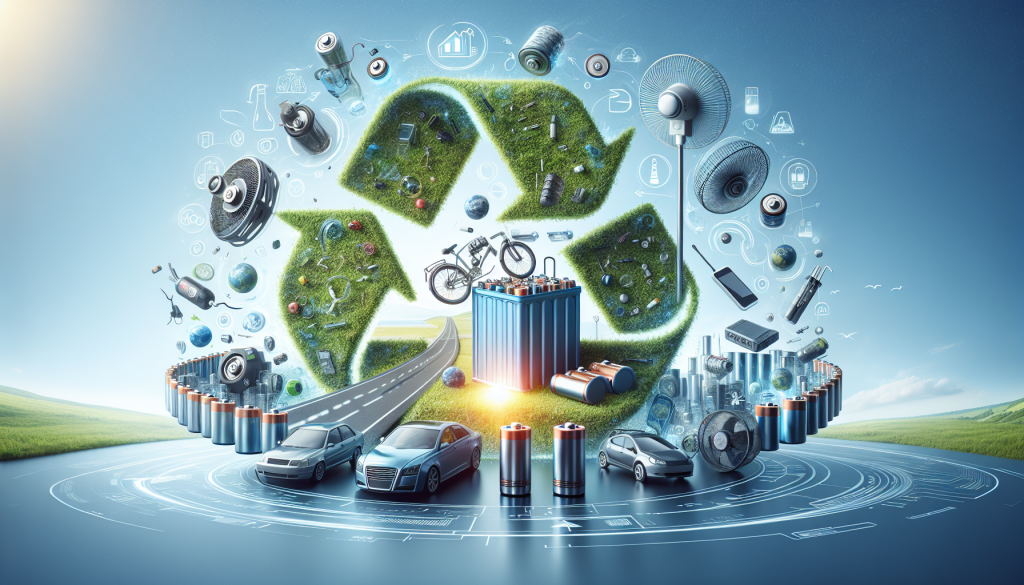
The global shift toward electrification has created an unprecedented strain on critical mineral supplies, transforming what was once considered waste into one of the most compelling investment opportunities of our time. As lithium prices continue their volatile dance and supply chains face persistent bottlenecks, the battery recycling opportunity has evolved from an environmental necessity into an economic imperative that’s reshaping entire industries.
Current market dynamics paint a picture of scarcity meeting innovation. Global lithium demand has surged beyond 800,000 tonnes annually, while traditional mining operations struggle to keep pace with exponential growth in electric vehicle production and energy storage deployments. This supply-demand imbalance has pushed lithium carbonate prices to remain elevated despite recent corrections, creating fertile ground for alternative sourcing strategies that bypass traditional extraction methods.
The economics driving the battery recycling opportunity have fundamentally shifted over the past eighteen months. Advanced recycling facilities can now recover up to 95% of lithium, cobalt, and nickel from spent batteries, with processing costs that often undercut primary mining operations. These facilities are achieving remarkable efficiency gains through hydrometallurgical and direct recycling processes that preserve the crystal structure of cathode materials, yielding higher-value outputs than conventional pyrometallurgical approaches.
Geographic concentration of critical mineral resources has amplified the strategic importance of domestic recycling capabilities. With over 60% of global lithium reserves concentrated in Chile, Argentina, and Australia, countries like the United States and those in the European Union are viewing battery recycling as essential infrastructure for supply chain resilience. Government incentives now support recycling operations through tax credits, grants, and regulatory frameworks that mandate minimum recycled content in new battery production.
The technological breakthrough enabling this battery recycling opportunity centers on closed-loop manufacturing systems where recycled materials feed directly back into new battery production. Tesla, CATL, and other major manufacturers have committed to sourcing increasing percentages of their lithium and cobalt from recycled sources, creating predictable demand streams that support large-scale recycling investments. These offtake agreements provide the revenue certainty necessary to justify the capital-intensive infrastructure required for industrial-scale operations.
Market timing considerations reveal why this battery recycling opportunity has reached critical mass now rather than earlier. The first generation of mass-produced electric vehicles is approaching end-of-life, creating a growing feedstock supply that will expand dramatically over the next decade. Industry analysts project that recycled battery materials could satisfy up to 25% of global lithium demand within eight years, representing a market value exceeding $18 billion annually.
Innovative business models are emerging around urban mining concepts where recycling facilities are strategically positioned near population centers to minimize transportation costs and maximize collection efficiency. These operations benefit from proximity to both supply sources and end markets, creating competitive advantages that traditional remote mining operations cannot match. The circular economy aspects also appeal to ESG-focused investors who recognize the dual benefits of resource recovery and environmental protection.
The confluence of supply constraints, technological advancement, and policy support has created a unique window where the battery recycling opportunity offers both attractive returns and strategic positioning for the energy transition. Companies that establish recycling capabilities now are positioning themselves to capture value from what may become the most important secondary commodity market of the next industrial revolution, turning yesterday’s waste into tomorrow’s essential resources.