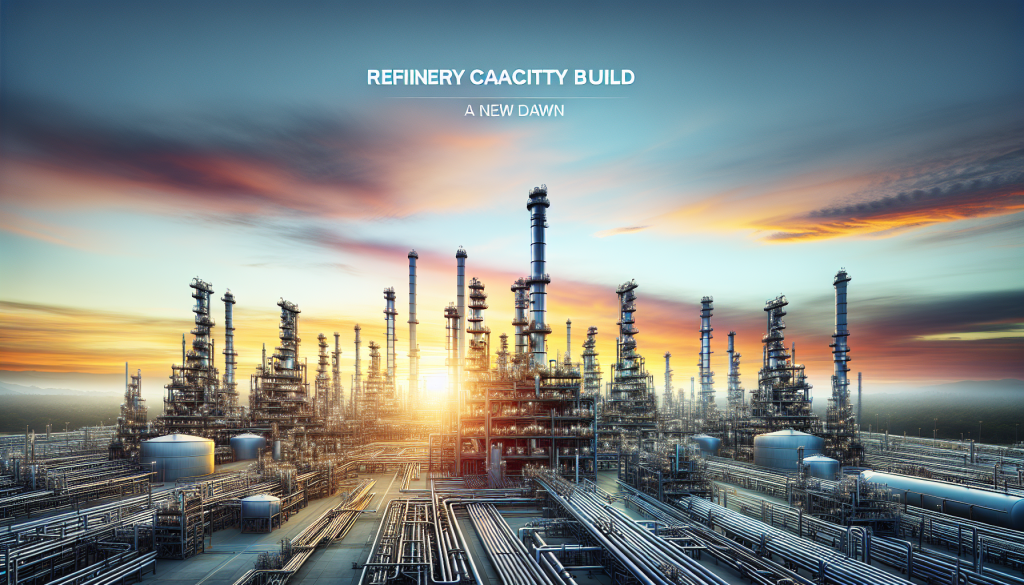
The global economy stands at a pivotal moment where the demand for critical minerals has never been higher, yet processing infrastructure remains woefully inadequate. This gap between raw material availability and refinery capacity build initiatives represents one of the most compelling investment opportunities in the modern industrial landscape. As nations scramble to secure supply chains for lithium, cobalt, rare earth elements, and other essential materials, forward-thinking investors are positioning themselves at the nexus of this transformation.
The magnitude of the opportunity becomes clear when examining current market dynamics. While mining operations have expanded significantly to meet growing demand from electric vehicle manufacturers, renewable energy companies, and technology firms, the refinery capacity build has lagged dangerously behind. This bottleneck has created price volatility and supply chain vulnerabilities that governments and corporations are now desperately trying to address through massive capital investments.
Investment prospects in refinery capacity build projects are particularly attractive due to their strategic importance and high barriers to entry. Unlike mining operations that face geological uncertainties and environmental challenges, refining facilities offer more predictable returns once operational. The complex regulatory approval process and significant capital requirements effectively limit competition, creating natural moats for established players and well-capitalized new entrants.
Geographic diversification has become a critical factor driving refinery capacity build investments. Currently, China dominates global processing capabilities for most critical minerals, controlling over 80% of rare earth refining and substantial portions of lithium and cobalt processing. This concentration has prompted Western governments to offer unprecedented incentives for domestic refinery capacity build projects, including tax credits, loan guarantees, and streamlined permitting processes.
The financial returns from strategic refinery capacity build investments are compelling when viewed through a long-term lens. Unlike commodity mining, which faces cyclical price pressures, processing facilities benefit from relatively stable margins and long-term supply contracts. Major automotive manufacturers and battery producers are actively seeking partnerships with refining companies to secure future supply, often willing to provide advance payments or equity investments to guarantee capacity allocation.
Technology advancement within the refinery capacity build sector presents additional investment angles beyond traditional processing facilities. Next-generation extraction techniques, waste reduction technologies, and automated systems are revolutionizing operational efficiency. Companies developing proprietary refining technologies or sustainable processing methods are attracting significant venture capital and strategic investor interest, as traditional refiners seek to license breakthrough innovations.
Environmental considerations have evolved from regulatory compliance issues to competitive advantages in the refinery capacity build landscape. Facilities incorporating carbon capture, renewable energy integration, and circular economy principles are commanding premium valuations and preferential treatment from both regulators and end-customers. This trend has created opportunities for specialized environmental technology providers and sustainable infrastructure developers.
The interconnected nature of critical mineral supply chains means that successful refinery capacity build investments often create synergistic opportunities across multiple sectors. Processing facilities for battery materials naturally attract downstream manufacturing investments, creating industrial clusters that benefit from shared infrastructure, skilled workforce development, and regulatory efficiency. These ecosystem effects multiply investment returns and reduce operational risks.
Market timing favors immediate action in refinery capacity build investments, as lead times for new facilities typically range from three to seven years. With demand projections showing exponential growth in electric vehicle adoption and renewable energy deployment, facilities coming online in the next decade will capture premium pricing during the most acute supply shortage periods. Early movers in strategic locations with favorable regulatory environments are positioning themselves to dominate emerging markets.
The convergence of technological innovation, geopolitical necessity, and unprecedented demand growth has created a rare alignment of factors favoring refinery capacity build investments. As critical mineral processing evolves from a niche industrial sector to a cornerstone of national security and economic competitiveness, investors who recognize and act on these opportunities today will likely benefit from decades of sustained growth and strategic importance in the global economy.
