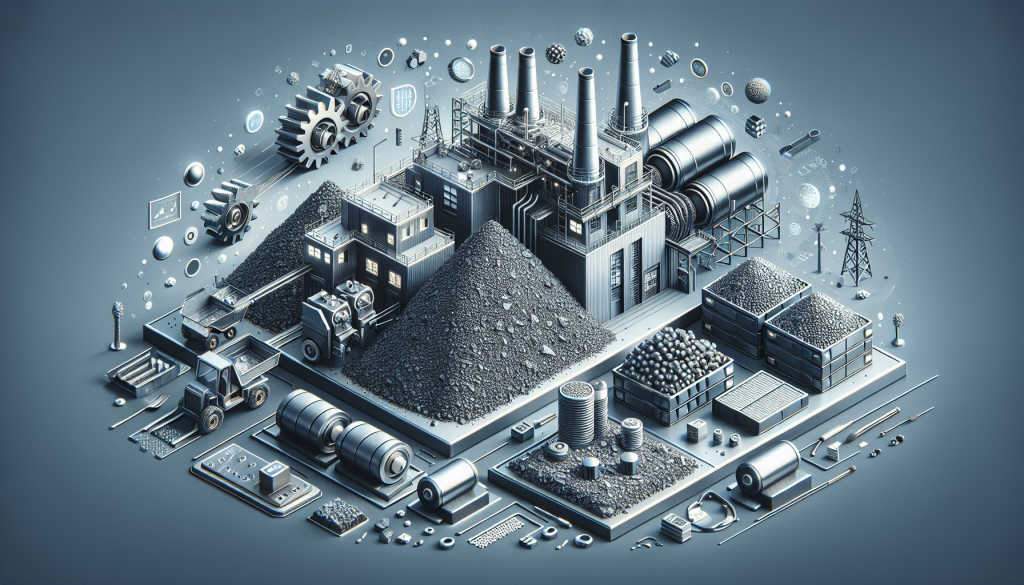
The battery revolution is reshaping global commodity markets, but while lithium and cobalt capture headlines, a quieter transformation is unfolding in the graphite sector. As electric vehicle production scales exponentially and energy storage demands soar, graphite anode supply is emerging as the critical bottleneck that could define the next phase of the clean energy transition.
Graphite represents the largest component by weight in lithium-ion batteries, comprising up to 95% of the anode material. Every electric vehicle battery requires approximately 50-100 kilograms of graphite, compared to just 8-12 kilograms of lithium. Despite this fundamental importance, graphite markets have operated in relative obscurity, creating a supply-demand imbalance that astute investors are beginning to recognize.
The mathematics of graphite anode supply constraints are becoming increasingly stark. Global electric vehicle sales are projected to reach 40 million units annually by 2030, requiring an estimated 2.4 million tons of battery-grade graphite. Current production capacity sits at approximately 1.6 million tons, with natural graphite accounting for roughly 65% of supply and synthetic graphite comprising the remainder. This structural deficit represents one of the most compelling investment narratives in the materials sector.
China’s dominance in graphite processing presents additional complexity for Western battery manufacturers seeking supply chain security. Chinese companies control approximately 80% of global graphite anode material production, with facilities concentrated in regions where environmental regulations and geopolitical tensions create ongoing supply risks. Recent export restrictions have already triggered price volatility, sending ripple effects through battery manufacturing supply chains.
Natural graphite deposits exist globally, but transforming raw flake graphite into battery-grade spherical graphite requires sophisticated processing capabilities. The spheronization process, which shapes graphite particles for optimal battery performance, demands significant capital investment and technical expertise. Companies that can establish integrated operations from mine to refined anode material are positioning themselves at the center of a rapidly expanding market.
Synthetic graphite production, derived from petroleum coke, offers an alternative pathway but faces its own constraints. Manufacturing synthetic graphite requires temperatures exceeding 2,800 degrees Celsius and substantial electricity inputs, making production costs sensitive to energy prices. As carbon pricing mechanisms expand globally, synthetic graphite producers must navigate both input cost inflation and environmental compliance requirements.
The emergence of next-generation battery chemistries is further intensifying graphite anode supply dynamics. Silicon-graphite composite anodes, which promise higher energy density for premium applications, still rely heavily on graphite as the primary component. Even solid-state batteries, often touted as the future of energy storage, utilize graphite anodes in current commercial iterations. This technological resilience underscores graphite’s enduring importance in battery manufacturing.
Investment capital is beginning to flow toward graphite projects, but development timelines create near-term supply constraints. Bringing a new graphite mine and processing facility online typically requires 5-7 years, while demand growth continues accelerating. This temporal mismatch between supply development and demand expansion creates pricing power for existing producers and development opportunities for well-positioned projects.
Regional supply chain localization initiatives are amplifying investment interest in graphite anode supply projects. The U.S. Inflation Reduction Act requires domestic content for battery tax credits, while European battery regulations mandate supply chain traceability. These policy frameworks are driving automotive and battery manufacturers to secure long-term graphite supply agreements, often involving equity investments or prepayment structures that reduce project financing risks.
Quality specifications for battery-grade graphite create additional barriers to entry that protect established producers. Anode materials must meet stringent purity requirements, typically exceeding 99.95% carbon content, while maintaining precise particle size distributions and electrochemical performance characteristics. These technical standards limit the universe of viable graphite sources and processing facilities, concentrating value creation among qualified suppliers.
As the clean energy transition accelerates, graphite anode supply represents a convergence of fundamental demand growth, supply constraints, and geopolitical realignment that defines generational investment opportunities. The companies that successfully navigate the technical, environmental, and capital challenges of graphite production will likely emerge as essential partners in the global battery supply chain, positioned to capture value from the largest industrial transformation of our time.