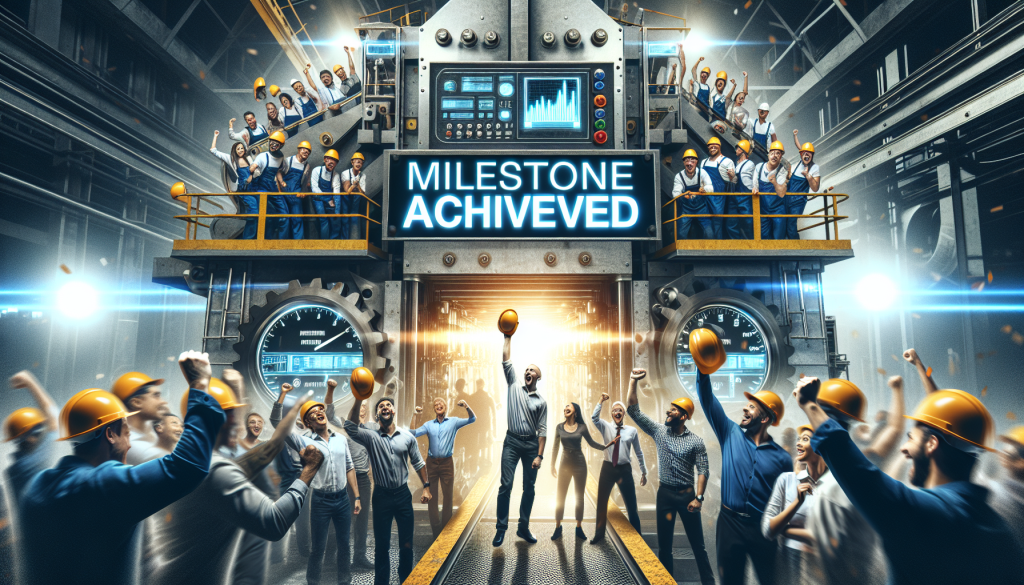
In the volatile world of metal production, where billion-dollar projects can make or break companies, one critical juncture separates promising ventures from spectacular failures: the production ramp-up milestone. This pivotal phase marks the transition from construction completion to achieving targeted output levels, yet it remains one of the most challenging and risk-laden periods in any mining or metallurgical operation.
The production ramp-up milestone represents far more than simply turning on machinery and hoping for the best. It encompasses a complex orchestration of human resources, equipment optimization, supply chain coordination, and process refinement that can span months or even years. For metal producers, this phase determines whether massive capital investments will generate expected returns or become cautionary tales for industry observers.
Market data consistently demonstrates that companies successfully navigating their production ramp-up milestone typically see their stock valuations increase by 25-40% within the first year of achieving steady-state production. Conversely, those experiencing prolonged ramp-up challenges often face significant investor exodus and financing difficulties that can threaten long-term viability.
The technical complexity underlying a successful production ramp-up milestone cannot be overstated. Modern metal production facilities integrate sophisticated automation systems, environmental controls, and quality assurance protocols that must function harmoniously under real-world conditions. Unlike controlled testing environments, actual production introduces variables such as ore grade variations, equipment wear patterns, and workforce learning curves that can dramatically impact output efficiency.
Workforce development plays an equally crucial role in achieving production ramp-up milestones. Even the most advanced facilities require skilled operators who understand both the theoretical principles and practical nuances of metal production processes. Training programs must balance speed with thoroughness, ensuring personnel can safely and efficiently operate complex equipment while maintaining quality standards that meet customer specifications.
Supply chain reliability becomes paramount during the production ramp-up milestone phase. Raw material procurement, spare parts availability, and logistics coordination must scale proportionally with increasing output levels. Many producers underestimate the complexity of managing vendor relationships and inventory levels during this transitional period, leading to costly production interruptions that extend ramp-up timelines.
Environmental compliance adds another layer of complexity to the production ramp-up milestone. Regulatory agencies scrutinize emissions, waste management, and resource utilization more closely during initial production phases, requiring companies to demonstrate sustained compliance rather than short-term achievements. Any environmental violations during ramp-up can result in production shutdowns that reset progress and damage stakeholder confidence.
Financial markets closely monitor production ramp-up milestone progress as a leading indicator of management competence and project viability. Quarterly production reports during ramp-up phases often trigger significant stock price movements, making transparent communication with investors essential for maintaining market confidence. Companies that provide realistic timelines and regular progress updates typically fare better than those offering overly optimistic projections.
Quality control systems face their ultimate test during the production ramp-up milestone. Laboratory-scale processes that performed flawlessly must now consistently deliver specification-grade products at commercial volumes. This scaling challenge requires sophisticated statistical process control, real-time monitoring systems, and rapid response protocols to address quality deviations before they impact customer relationships.
Cost management during production ramp-up milestones requires careful balance between achieving output targets and controlling operational expenses. Higher-than-normal maintenance costs, increased supervision requirements, and process optimization investments are typical during this phase, yet must be managed within budgetary constraints to preserve project economics.
The competitive advantages gained from successfully executing a production ramp-up milestone extend well beyond immediate financial returns. Companies demonstrating operational excellence during this critical phase build reputations that facilitate future project financing, attract top industry talent, and establish customer relationships based on reliability rather than merely price competitiveness.
For metal producers operating in today’s capital-intensive environment, the production ramp-up milestone represents the culmination of years of planning, investment, and risk management. Those who approach this phase with comprehensive preparation, realistic expectations, and adaptive management strategies position themselves for sustained success in an increasingly competitive global marketplace. The companies that master this critical transition don’t just survive the ramp-up process—they emerge as industry leaders with proven capabilities that drive long-term shareholder value.