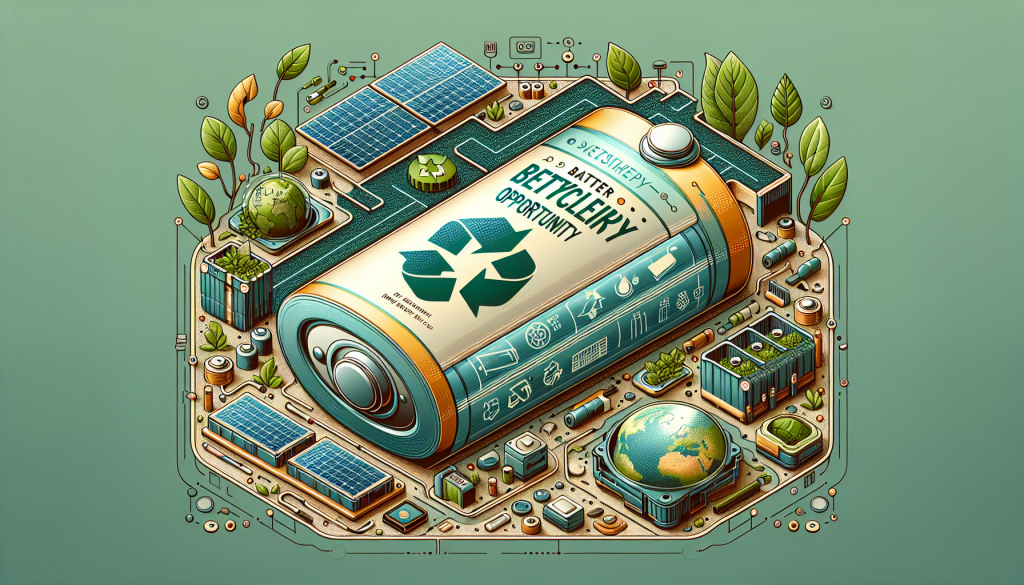
The global transition to electric vehicles and renewable energy storage has created an unprecedented demand for lithium, cobalt, nickel, and other critical minerals. As these materials become increasingly scarce and expensive, a massive battery recycling opportunity has emerged that could reshape entire industries and generate billions in revenue over the next decade.
Lithium prices have experienced extreme volatility, surging from around $7,000 per metric ton in early 2021 to peaks exceeding $80,000 before settling into current ranges between $15,000-25,000 per metric ton. This price instability, combined with geopolitical tensions affecting mineral supply chains, has made battery recycling not just environmentally responsible but economically essential. The recycling industry now represents a critical pathway to securing domestic mineral supplies while reducing dependence on volatile international markets.
The numbers tell a compelling story about this emerging battery recycling opportunity. Industry analysts project that by 2030, recycled materials could supply up to 20% of global lithium demand, 25% of cobalt requirements, and 15% of nickel needs for battery manufacturing. This represents a market opportunity valued at over $18 billion annually, driven by both raw material recovery and the growing volume of end-of-life batteries from early electric vehicle adoption.
Technological advances in hydrometallurgical and pyrometallurgical processes have dramatically improved recovery rates for critical minerals from spent batteries. Modern recycling facilities can now recover up to 95% of lithium, 98% of cobalt, and 96% of nickel from lithium-ion batteries, making recycled materials cost-competitive with newly mined alternatives. These efficiency gains have attracted significant investment from automotive manufacturers, battery producers, and specialized recycling companies seeking to secure their supply chains.
The regulatory landscape is amplifying this battery recycling opportunity through increasingly stringent requirements. The European Union’s Battery Regulation mandates minimum recycled content requirements that will reach 12% for lithium and 85% for cobalt by 2031. Similar legislation is advancing in North America and Asia, creating guaranteed demand for recycled materials and establishing recycling as a compliance necessity rather than just an environmental initiative.
Major automotive manufacturers are recognizing the strategic importance of battery recycling and investing heavily in circular economy initiatives. Tesla’s partnership with Redwood Materials, Ford’s collaboration with Redwood and Li-Cycle, and General Motors’ investment in recycling infrastructure demonstrate how industry leaders are positioning themselves to capture this opportunity. These partnerships often include long-term supply agreements that provide recyclers with predictable revenue streams while giving manufacturers access to sustainably sourced materials.
The timing of this battery recycling opportunity aligns perfectly with the maturation of first-generation electric vehicle batteries. Vehicles sold between 2012-2018 are beginning to reach end-of-life status, creating a growing feedstock for recycling operations. Additionally, manufacturing scrap from rapidly expanding battery production facilities provides an immediate source of recyclable materials, with some facilities generating 5-15% scrap rates during production scaling.
Geographic considerations add another dimension to the market opportunity. Countries with limited domestic mineral resources but strong automotive manufacturing bases, such as Japan, South Korea, and parts of Europe, are investing heavily in recycling infrastructure to reduce import dependence. This has created regional price premiums for recycled materials and opportunities for specialized logistics and processing companies.
Investment in recycling technology continues to accelerate, with venture capital and private equity firms committing over $2.8 billion to battery recycling startups since 2022. These investments are funding development of direct recycling methods that preserve cathode material structure, potentially offering even higher value recovery than traditional approaches. Companies developing these advanced technologies are attracting premium valuations and strategic partnerships with major industry players.
The convergence of supply constraints, technological advancement, regulatory requirements, and growing battery waste streams has created a unique window for the battery recycling opportunity. Forward-thinking investors and companies that establish positions in this market now stand to benefit from decades of growth as the circular battery economy becomes an integral part of the global energy transition, transforming what was once considered waste into a valuable strategic resource.