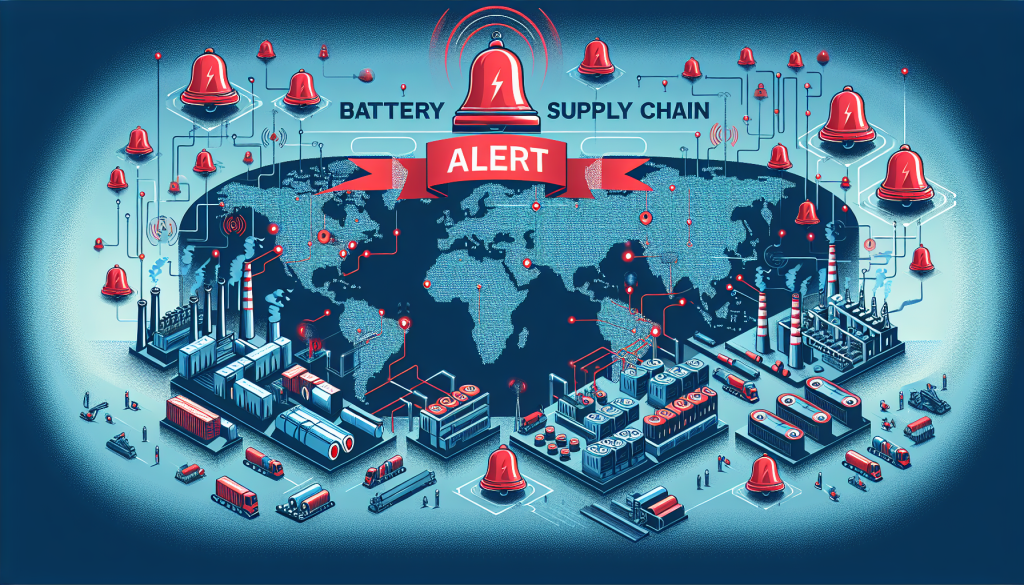
Global manufacturers are sounding the alarm as critical battery metals reach unprecedented price levels, triggering a widespread battery supply chain alert that threatens to reshape the electric vehicle and energy storage industries. Lithium carbonate prices have surged 340% over the past eighteen months, while cobalt and nickel face similar volatility, forcing industry leaders to reassess production timelines and cost structures.
The current market disruption stems from a perfect storm of geopolitical tensions, mine production delays, and explosive demand growth. China’s dominance in lithium processing—controlling roughly 80% of global refining capacity—has created bottlenecks that ripple through every segment of the battery ecosystem. Meanwhile, the Democratic Republic of Congo’s cobalt mining operations face ongoing infrastructure challenges, contributing to supply uncertainty that keeps procurement teams on high alert.
Tesla, General Motors, and Ford have all reported significant input cost pressures, with some manufacturers considering temporary production adjustments. Industry analysts estimate that current metal price inflation adds approximately $2,400 to the cost of producing a standard 75kWh battery pack, directly impacting EV affordability targets that automakers have spent years working toward.
The battery supply chain alert extends beyond traditional automotive applications, affecting grid-scale energy storage projects crucial for renewable energy adoption. Utility companies developing solar and wind installations are experiencing project delays as battery system costs escalate, potentially slowing the transition to clean energy infrastructure.
Nickel presents perhaps the most complex challenge within this supply crisis. Indonesia’s aggressive expansion of nickel pig iron production has flooded markets with lower-grade material, while high-grade nickel suitable for battery applications remains scarce. This quality gap forces battery manufacturers to invest in additional processing capabilities or accept reduced energy density in their products.
Forward-looking companies are responding to this battery supply chain alert through vertical integration strategies and alternative chemistry development. LG Energy Solution recently announced plans to secure direct mining partnerships in Australia and Chile, while CATL continues advancing lithium iron phosphate technology that eliminates cobalt dependency entirely.
Recycling initiatives are gaining unprecedented momentum as companies recognize that urban mining—recovering metals from end-of-life batteries—represents a critical supply diversification strategy. Redwood Materials and Li-Cycle have expanded operations significantly, with recycling capacity expected to meet 15% of North American battery metal demand within three years.
Government intervention is reshaping supply dynamics through strategic mineral stockpiling and domestic mining incentives. The United States Inflation Reduction Act includes substantial credits for domestically sourced battery materials, while European Union regulations increasingly favor supply chains with reduced geographic concentration risk.
Market participants are closely monitoring sodium-ion battery development as a potential game-changer for energy storage applications. While energy density limitations prevent sodium-ion adoption in premium EVs, grid storage and commercial applications could absorb significant volumes, reducing pressure on lithium supplies.
Price volatility continues to challenge long-term planning across the battery ecosystem. Procurement teams report difficulty securing fixed-price contracts beyond six-month terms, forcing manufacturers to build additional cost flexibility into their product development cycles. This uncertainty particularly impacts smaller battery companies lacking the negotiating power of major automotive manufacturers.
The current battery supply chain alert represents more than temporary market friction—it signals a fundamental shift toward supply security prioritization over pure cost optimization. Companies that successfully navigate this transition through diversified sourcing, alternative chemistries, and recycling integration will emerge stronger, while those relying on traditional procurement models face continued vulnerability to metal market volatility that shows no signs of abating.