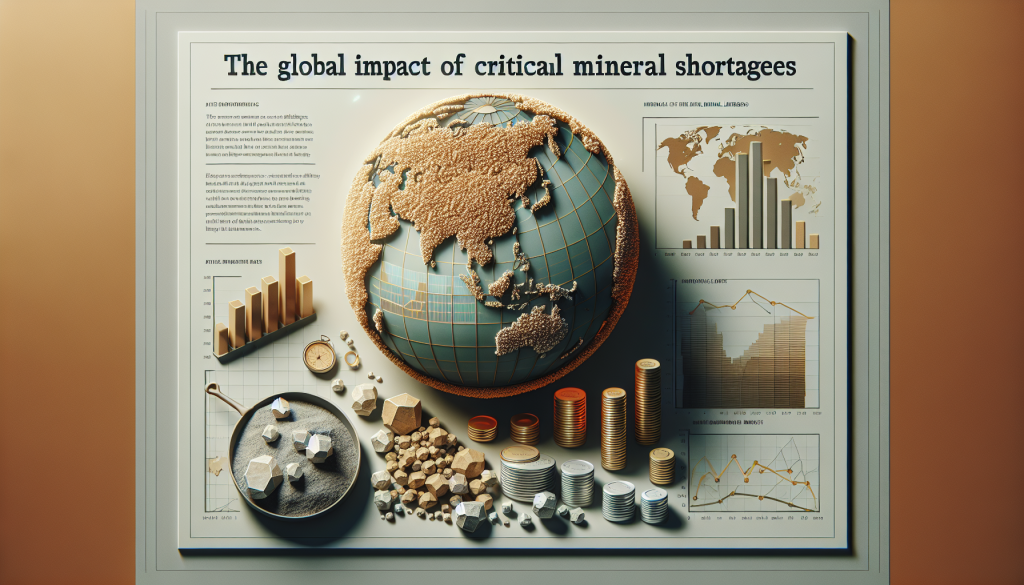
The global economy is facing an unprecedented challenge that’s creating extraordinary investment opportunities for those who recognize the signs. The critical mineral shortage has evolved from a distant concern to an immediate crisis affecting everything from renewable energy infrastructure to consumer electronics manufacturing. As governments worldwide scramble to secure supply chains and companies pay premium prices for essential materials, savvy investors are positioning themselves to profit from this fundamental shift in resource scarcity.
The scale of this critical mineral shortage cannot be overstated. Lithium prices have surged 400% since early 2025, while rare earth elements essential for wind turbines and electric vehicle motors have seen supply disruptions that have sent prices soaring. The International Energy Agency estimates that demand for critical minerals will increase by 300-500% by 2030 to meet clean energy targets, yet current mining capacity falls woefully short of these projections. This supply-demand imbalance is creating a perfect storm for investors willing to navigate the complexities of the mineral markets.
Traditional investment approaches are being rewritten as the critical mineral shortage reshapes entire industries. Companies that secured long-term supply agreements for lithium, cobalt, and rare earth elements before the shortage intensified are now trading at significant premiums to their peers. Meanwhile, mining companies with proven reserves of these critical materials are experiencing valuation multiples not seen since the commodity supercycle of the early 2000s. The difference this time is that the shortage isn’t driven by speculative demand, but by fundamental shifts toward electrification and renewable energy that show no signs of slowing.
Strategic Investment Approaches in Critical Mineral Markets
Direct investment in mining companies represents the most obvious approach to capitalizing on the critical mineral shortage, but it’s far from the only strategy. Junior mining companies with exploration projects in lithium-rich regions of Argentina, Chile, and Australia have attracted significant venture capital, though these investments carry substantial geological and regulatory risks. More conservative investors are turning to established mining giants that have diversified critical mineral portfolios, offering exposure to the shortage while maintaining operational stability.
Technology companies developing mineral processing innovations are emerging as unexpected beneficiaries of the critical mineral shortage. Firms specializing in battery recycling, mineral extraction efficiency, and synthetic alternatives to scarce materials are attracting both private equity and strategic investment from major manufacturers. These companies offer a different angle on the shortage – profiting not just from high mineral prices, but from the urgent need for supply chain solutions.
Exchange-traded funds focused on critical minerals have gained tremendous popularity, allowing retail investors to gain diversified exposure without the complexity of individual stock selection. These funds typically hold portfolios of mining companies, mineral royalty firms, and technology companies positioned to benefit from the critical mineral shortage. Performance has been volatile but generally strong, with the largest critical minerals ETF posting 180% returns over the past eighteen months.
Geographic and Geopolitical Investment Considerations
The critical mineral shortage isn’t just an economic phenomenon – it’s reshaping geopolitical relationships and creating new investment hotspots. Countries with significant critical mineral reserves are leveraging their positions to attract foreign investment and build domestic processing capabilities. Indonesia’s nickel processing boom, driven by electric vehicle battery demand, has created opportunities for investors willing to navigate emerging market risks.
North American critical mineral projects are commanding premium valuations due to supply chain security concerns, even when their economics might be less attractive than overseas alternatives. The critical mineral shortage has made supply reliability as important as cost efficiency, fundamentally changing how companies and investors evaluate opportunities. Canadian lithium projects and U.S. rare earth development initiatives are receiving government support that significantly reduces investment risk profiles.
The investment landscape surrounding the critical mineral shortage continues to evolve rapidly, with new opportunities emerging as the crisis deepens and expands to previously stable mineral markets. Investors who understand both the technical aspects of mineral supply chains and the broader economic forces driving demand are positioning themselves to benefit from what many analysts believe will be a multi-decade investment theme. As the world’s transition to clean energy accelerates and the critical mineral shortage intensifies, the companies and investors who moved early into this space are likely to reap the greatest rewards from this fundamental shift in resource scarcity.
