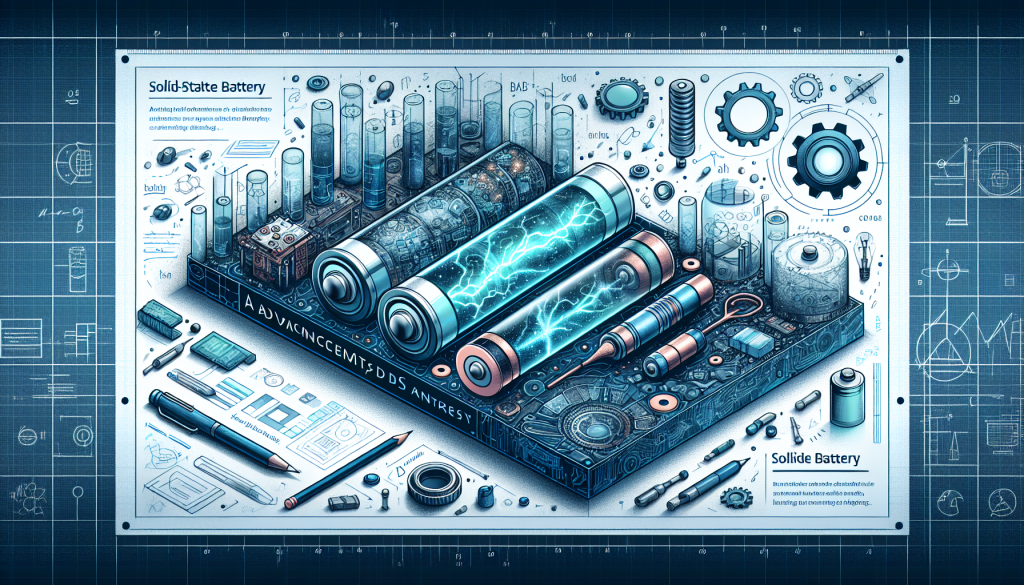
The energy storage landscape is experiencing its most significant transformation since lithium-ion batteries entered mainstream markets three decades ago. A solid-state battery advance has finally crossed the threshold from laboratory curiosity to commercial reality, delivering energy densities exceeding 400 Wh/kg while maintaining safety profiles that traditional batteries cannot match.
Unlike conventional lithium-ion systems that rely on liquid electrolytes, solid-state batteries employ ceramic or polymer solid electrolytes that eliminate many safety risks associated with thermal runaway. This fundamental design shift has unlocked performance characteristics that seemed impossible just five years ago. Leading manufacturers are now producing cells that charge to 80% capacity in under ten minutes while delivering triple the energy density of current battery technology.
The automotive sector has emerged as the primary catalyst driving this solid-state battery advance. Major automakers have committed over $50 billion in manufacturing investments, with production facilities scheduled to reach full capacity within eighteen months. These batteries enable electric vehicles to achieve ranges exceeding 800 miles on a single charge while reducing vehicle weight by approximately 40%. The technology has already begun appearing in premium vehicle models, with mass-market adoption expected to accelerate rapidly as production scales increase.
Beyond transportation applications, grid-scale energy storage represents perhaps the most transformative opportunity. Utility companies are deploying solid-state battery systems that can store renewable energy for weeks rather than hours, fundamentally altering how power grids manage intermittent solar and wind generation. These installations occupy 60% less physical space than comparable lithium-ion systems while delivering superior performance in extreme weather conditions.
Manufacturing Scalability Reaches Critical Mass
The transition from prototype to mass production has historically been the greatest challenge facing battery innovations. However, recent solid-state battery advance achievements have overcome the manufacturing bottlenecks that previously limited commercial viability. Advanced deposition techniques and automated assembly processes have reduced production costs by 70% compared to early-stage estimates, bringing pricing within range of traditional battery systems.
Supply chain integration has proven equally crucial to this progress. Mining companies have established dedicated processing facilities for the specialized materials required in solid electrolytes, while equipment manufacturers have developed production lines specifically designed for solid-state cell assembly. This coordinated industry response has created a robust ecosystem capable of supporting massive deployment across multiple sectors.
Consumer electronics manufacturers are already incorporating solid-state batteries into next-generation devices, delivering smartphones and laptops that operate for days between charges while maintaining compact form factors. The technology’s inherent safety advantages have enabled designers to pack significantly more energy into smaller spaces without the thermal management systems required by liquid electrolyte batteries.
Global Energy Infrastructure Transformation
The implications of this solid-state battery advance extend far beyond individual applications, reshaping entire energy systems worldwide. Developing nations are leveraging the technology to bypass traditional grid infrastructure, deploying distributed storage networks that provide reliable electricity access to previously underserved regions. These installations combine seamlessly with solar panel arrays, creating self-sufficient microgrids that operate independently of centralized power systems.
Industrial applications have embraced solid-state batteries for their exceptional stability and longevity. Manufacturing facilities are installing massive storage arrays that provide backup power while optimizing energy consumption during peak demand periods. The batteries’ ability to maintain performance across thousands of charge cycles without significant degradation makes them particularly attractive for continuous industrial operations.
Aerospace and maritime sectors are experiencing revolutionary changes as solid-state batteries enable electric propulsion systems previously considered impractical. Regional aircraft manufacturers have successfully completed test flights using solid-state battery power, while shipping companies are developing hybrid vessel designs that significantly reduce fossil fuel consumption on long-haul routes.
The solid-state battery advance represents more than incremental technological improvement—it marks a fundamental shift toward truly sustainable energy systems. As production continues scaling and costs decrease further, these batteries are positioned to become the dominant energy storage solution across virtually every sector of the global economy. The transformation is already underway, accelerating the energy transition at a pace that seemed unimaginable just a few years ago, and establishing the foundation for a fully electrified future built on clean, efficient, and reliable energy storage technology.