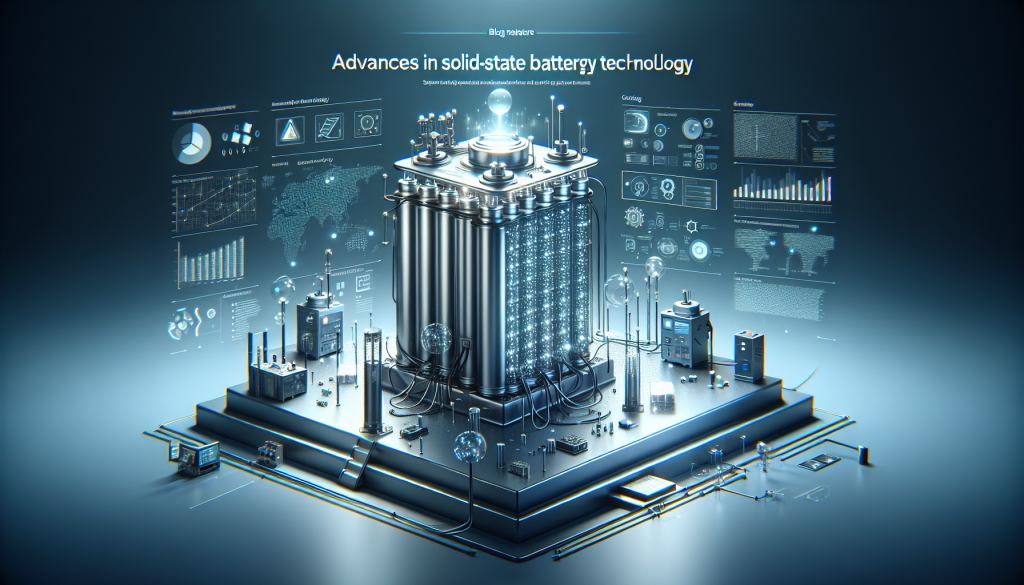
The energy storage revolution has reached a pivotal moment as solid-state battery technology emerges from laboratory prototypes to commercial reality. This groundbreaking solid-state battery advance represents more than just incremental improvement—it signals a fundamental transformation in how we store, distribute, and utilize energy across every sector of the global economy.
Traditional lithium-ion batteries, while revolutionary in their own right, face inherent limitations that have constrained energy storage applications for decades. Their liquid electrolytes create safety risks through thermal runaway, limit operating temperature ranges, and degrade over time through chemical reactions. The latest solid-state battery advance eliminates these constraints by replacing liquid electrolytes with solid ceramic or polymer materials, creating unprecedented opportunities for energy density, safety, and longevity.
The performance gains from this solid-state battery advance are staggering. Current solid-state prototypes demonstrate energy densities exceeding 400 watt-hours per kilogram—nearly double that of conventional lithium-ion cells. This dramatic improvement translates directly into electric vehicles with 800-mile ranges, smartphones that charge in minutes and last for days, and grid storage systems capable of supporting renewable energy at massive scale.
Manufacturing breakthroughs have been equally transformative. Companies like Toyota, Samsung, and QuantumScape have overcome the production challenges that previously made solid-state batteries prohibitively expensive. New ceramic processing techniques and automated assembly lines are driving costs down rapidly, with industry analysts projecting price parity with lithium-ion batteries within three years. This economic viability accelerates the timeline for widespread adoption across consumer electronics, automotive, and industrial applications.
The automotive sector stands at the epicenter of this solid-state battery advance revolution. Electric vehicle manufacturers are redesigning entire platforms around the unique characteristics of solid-state technology. The enhanced safety profile eliminates the need for extensive thermal management systems, reducing vehicle weight and complexity. Faster charging capabilities—some solid-state cells can reach 80% capacity in under ten minutes—address the primary consumer barrier to electric vehicle adoption.
Beyond transportation, this solid-state battery advance is reshaping renewable energy infrastructure. Solar and wind power generation requires massive energy storage to manage intermittency and provide grid stability. Solid-state batteries offer the durability and cycle life necessary for decades of reliable operation. Their resistance to temperature fluctuations and degradation makes them ideal for utility-scale installations in challenging environments.
The geopolitical implications of solid-state battery advance extend far beyond technology. Countries and regions positioning themselves as leaders in solid-state manufacturing are securing strategic advantages in the clean energy transition. China has invested billions in solid-state production capacity, while European nations are establishing domestic supply chains to reduce dependence on imported battery technology. The United States is accelerating research funding and manufacturing incentives to maintain competitiveness in this critical sector.
Supply chain dynamics are evolving rapidly as this solid-state battery advance matures. Traditional lithium-ion materials like cobalt and nickel become less critical, while demand surges for solid electrolyte materials including ceramics and advanced polymers. Mining companies, chemical processors, and equipment manufacturers are reconfiguring operations to serve emerging solid-state production requirements.
The integration challenges accompanying this solid-state battery advance require innovative solutions across multiple industries. Electronic device manufacturers must redesign charging systems and power management circuits to accommodate different voltage characteristics and charging profiles. Grid operators are developing new protocols for solid-state storage integration, while regulatory agencies establish safety standards for commercial deployment.
Investment flows reflect the transformative potential of solid-state battery advance. Venture capital, private equity, and strategic corporate investments have exceeded $15 billion in solid-state companies over the past two years. Public markets are responding with significant valuations for firms demonstrating viable solid-state technologies, while traditional battery manufacturers face pressure to accelerate their own solid-state development programs.
As this solid-state battery advance continues accelerating, its impact extends beyond individual applications to fundamentally reshape global energy architecture. The combination of higher performance, improved safety, and declining costs creates a cascade of opportunities across transportation, electronics, renewable energy, and industrial applications. This technological leap represents not just an evolution in energy storage, but a catalyst for the broader transformation toward sustainable, electrified global energy systems that will define the coming decades.